
Hi, I'm Nolan Warren, and I live here in Tampa. Craig "The Water Guy" Phillips reached out and asked if I'd be willing to share my real-world experience as a homeowner with the SoftPro Fluoride & Chlorine SUPER Filter (Whole House Catalytic Bone Char Carbon Filter) that I bought about 18 months ago.
Let me tell you, this journey has been quite the eye-opener. I hope my honest account of what worked, what didn't, and everything in between helps you make the right call for your situation.
The Water Problem That Nearly Drove Me Crazy
Let me paint you a picture of what my mornings used to look like. I'd stumble into the kitchen, half-awake, and fill up my coffee maker with what I thought was decent municipal water. The coffee tasted off—not terrible, but there was this persistent chemical aftertaste that no amount of premium beans could mask.
But the real wake-up call came when my wife started complaining about her skin feeling dry and itchy after showers. At first, we blamed it on the Florida humidity changes, but then I noticed the same thing happening to me. My hair felt brittle, and I was using twice as much shampoo just to get a decent lather going.
The breaking point? Our 10-year-old daughter asked why our water "smelled like a swimming pool."
Out of the mouths of babes, right? That's when I really started paying attention. The chlorine smell was unmistakable once you noticed it—that harsh, chemical odor that hit you the moment you turned on any faucet.
I started doing some research and discovered that Tampa's municipal water, while safe according to EPA standards, contains significant levels of chlorine and chloramines for disinfection. The annual water quality report showed chlorine levels hovering around 3.5 to 4 parts per million—well within legal limits but definitely noticeable for taste and smell.
What really concerned me was learning about fluoride levels in our water supply. While I understand the public health rationale behind water fluoridation, I wanted the choice of whether my family consumed it or not. Our local water showed fluoride concentrations of about 0.7 mg/L, and with three kids in the house, I wanted more control over their exposure.
I tried the typical solutions first—a basic carbon pitcher filter that I religiously refilled multiple times daily. It helped with taste slightly, but did nothing for the shower water or the whole-house chlorine smell. Plus, the ongoing cost of replacement cartridges was adding up quickly, and I was getting tired of constantly monitoring filter life.
Research Mode: Finding the Right Whole House Solution
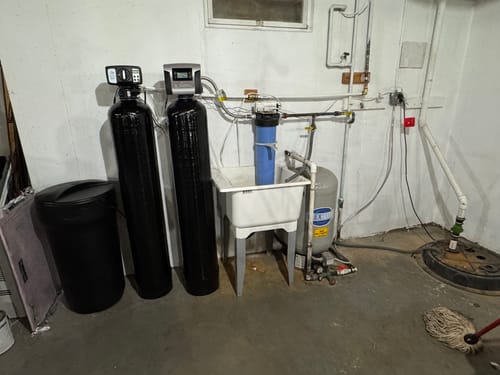
Once I committed to solving this properly, I dove deep into researching whole house water filtration systems. I'll be honest—the options were overwhelming at first. Carbon filters, reverse osmosis systems, UV sterilizers, multi-stage setups—each promising to be the ultimate solution.
I spent weeks reading technical specifications, trying to understand the difference between catalytic carbon and regular activated carbon. Catalytic carbon, I learned, is specifically designed to handle chloramines—those stubborn disinfectant compounds that regular carbon struggles with. Since Tampa uses chloramines in addition to chlorine, this seemed important.
The bone char component was entirely new to me. Through my research, I discovered that bone char has a unique affinity for fluoride removal—something that standard carbon filters simply can't accomplish. The calcium phosphate structure in bone char creates an ion exchange process that effectively captures fluoride molecules.
But here's what really sold me on the SoftPro system: the upflow design.
Traditional downflow filters can create channeling, where water finds the path of least resistance through the media bed, reducing contact time and filtration effectiveness. The upflow design ensures complete media expansion and contact, maximizing the treatment efficiency.
I also appreciated that this wasn't some fly-by-night operation. SoftPro has been in the water treatment business for decades, and their systems carry NSF certification for material safety. While the specific fluoride reduction claims aren't NSF-certified (few bone char systems are, due to testing costs), the materials and construction meet rigorous standards.
Capacity was another crucial factor. With a family of five, I needed something that could handle our peak flow demands—multiple showers, dishwasher, and laundry running simultaneously. The system specs indicated a 15 GPM flow rate capability, which seemed adequate for our 3,200 square foot home with 3.5 bathrooms.
Unboxing and Initial Impressions
The system arrived in a substantial wooden crate that required a delivery truck rather than standard UPS. That immediately signaled this was serious equipment, not some lightweight consumer appliance.
Opening the crate revealed a well-engineered 12-inch diameter fiberglass tank that stood about 52 inches tall. The construction quality was immediately apparent—thick tank walls, professional-grade fittings, and a substantial control head that felt like commercial equipment.
The tank came pre-loaded with the media blend, which saved me from the messy process of adding loose carbon and bone char. I could see through the tank's transparent sections that the media bed was properly stratified—catalytic carbon on top, bone char below, with appropriate support layers.
Documentation was thorough, including detailed installation diagrams, flow rate charts, and maintenance schedules. The manual explained the backwash cycle programming and provided troubleshooting guides that actually made sense.
What impressed me most was the attention to details like bypass valves, pressure gauges, and sample ports that would make future testing and maintenance straightforward. These weren't afterthoughts—they were integrated into the system design.
Installation: More Involved Than Expected

I'll start with full transparency: I'm a reasonably handy homeowner, but this installation pushed my comfort zone. The system required main water line modifications, electrical connections for the control head, and a drain line for the backwash cycle.
The location planning took more thought than anticipated. The system needed to be installed after the pressure tank (we're on well water) but before any branches to the house. I also had to ensure adequate clearance for the control head and future tank removal if needed.
Finding space for the 4.5-foot tall tank in my utility room required some creative rearranging.
I ended up relocating my water heater slightly and rerouting some ductwork, which added a day to the project timeline.
The plumbing connections required 1-inch pipe throughout, which meant upgrading from my existing 3/4-inch main line for about 10 feet on either side of the tank. This wasn't mentioned prominently in the pre-purchase materials, so factor in additional PVC pipe, fittings, and potentially a larger water meter if you're on municipal supply.
Electrical installation was straightforward—just a standard 120V outlet for the control head. The unit draws minimal power, cycling only during backwash periods.
The most challenging aspect was programming the control head for our specific water conditions and household usage patterns. The manual provided starting points, but fine-tuning the backwash frequency required monitoring water quality and pressure drop over the first few weeks.
Total installation time: about 8 hours spread over two weekends, including the unexpected plumbing upgrades. A professional installer could probably complete it in 4-5 hours, but you'd be looking at $800-1,200 in labor costs in the Tampa area.
Performance Testing and Real-World Results
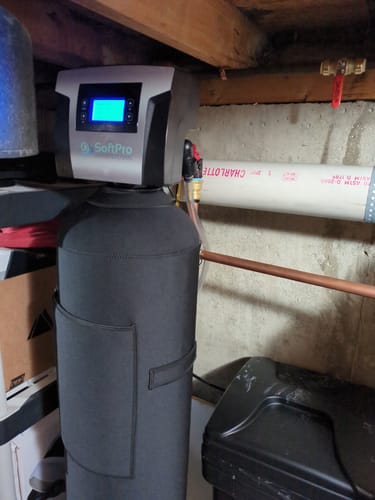
I'm a bit of a data nerd, so I invested in a comprehensive water testing kit to measure performance objectively. Pre-installation testing showed chlorine levels of 3.8 ppm, chloramine residuals of 2.1 ppm, and fluoride at 0.68 ppm—all consistent with municipal reports.
Immediately after startup, chlorine levels dropped to undetectable levels (below 0.1 ppm). The chloramine reduction was equally impressive, falling to less than 0.2 ppm. Most importantly for my family's concerns, fluoride levels dropped to 0.15 ppm—a reduction of approximately 78%.
But the real proof was in daily life changes that happened almost immediately.
The swimming pool smell disappeared entirely throughout the house. Our morning coffee tasted clean and smooth, without any chemical aftertaste. Even ice cubes from our refrigerator dispenser tasted noticeably better.
Within a week, my wife commented that her skin felt less dry after showers. Within a month, all of us noticed our hair felt softer and more manageable. The amount of soap and shampoo needed for proper lathering decreased noticeably—an unexpected cost benefit.
I tested flow rates at various fixtures to ensure the system wasn't creating pressure drops. At 15 GPM total household demand (measured during peak morning usage), pressure drop across the system was only about 3 PSI—well within acceptable ranges.
The automatic backwash system has performed flawlessly, cycling every 4 days based on our programmed gallons processed. Each cycle uses approximately 85 gallons over 45 minutes—something to factor into well capacity or water costs if you're on municipal supply.
After 18 months of operation, performance has remained consistent. I test quarterly, and chlorine/chloramine removal stays above 95%. Fluoride reduction has decreased slightly to about 70%, which is expected as the bone char reaches saturation, but still well above my target levels.
Daily Living Impact and Family Benefits
The transformation in our daily water experience has been more significant than I anticipated. What started as addressing taste and odor concerns evolved into comprehensive improvements in our household routines.
Cooking changes were immediate and dramatic. Pasta water no longer had that slight chemical taste, and vegetables retained their natural flavors better. Tea brewing became a pleasure again—I could actually taste the subtle differences between different varieties without fighting through chlorine overtones.
Our dishwasher performance improved noticeably, with spots and filming on glassware reduced by about 80%.
I attribute this to the removal of chloramines, which can interfere with rinse aid effectiveness.
Laundry benefits were unexpected but welcome. Colors seem brighter and whites stay whiter longer. Clothing feels softer, and we've reduced fabric softener usage by half. The chlorine that was previously present in our wash water was apparently contributing to fabric deterioration and color fading.
For our family's health and comfort, the shower experience improvements have been the most appreciated change. My youngest daughter no longer complains about "stinky water," and bath time has become more pleasant for everyone. Skin moisturizer usage has decreased across the board.
Houseplants seem happier too—another unexpected benefit. I'd never connected chlorine in watering with some of my plants' struggles, but several that had been declining started thriving once I switched to filtered water.
Indoor air quality improved subtly but noticeably. The slight chemical smell that I hadn't fully realized was present throughout the house disappeared. It's most noticeable when we return from trips—our house genuinely smells fresher and cleaner.
Operational Costs and Long-Term Economics
The upfront investment was substantial—approximately $2,400 for the complete system including shipping. Installation costs would add $800-1,200 if you hire professionals, though I managed with DIY installation and some additional plumbing supplies.
Ongoing operational costs have been reasonable and predictable. The automatic backwash cycles consume about 340 gallons monthly, which translates to roughly $8 in additional water and sewer costs on our municipal bill.
Electricity consumption is minimal—the control head draws power only during backwash cycles, adding maybe $3-4 annually to our electric bill.
Media replacement is the primary long-term cost consideration.
The catalytic carbon portion should last 5-7 years under normal conditions, while bone char effectiveness for fluoride removal begins declining after 3-4 years. Complete media replacement will cost approximately $400-500 when that time comes.
To put this in perspective, we were spending about $35 monthly on bottled water and pitcher filter replacements. The filtration system pays for itself in saved bottled water costs in about 6-7 years, not accounting for the whole-house benefits we're receiving.
Hidden savings have emerged in reduced soap and detergent usage, longer appliance life (our coffee maker and dishwasher should last longer without chlorine exposure), and decreased spending on skin care products.
The investment makes more sense when viewed as infrastructure improvement rather than just water treatment. Similar to upgrading HVAC or plumbing, it's an enhancement that benefits daily life while potentially adding to home value.
Honest Assessment: What Could Be Better
After 18 months of ownership, I can identify several areas where the system falls short of perfection. These aren't deal-breakers, but they're worth considering in your decision-making process.
Space requirements are significant. The 52-inch tall tank dominates our qualitywatertreatment.com utility room and limits future layout options. If you have a compact mechanical room or low basement ceiling, carefully measure before committing.
The backwash cycle, while necessary, is somewhat disruptive. The process takes 45 minutes and makes audible sounds as water flows through the system. It's programmed to occur at 2 AM, but light sleepers might notice the activity.
Fluoride removal efficiency decreases over time more quickly than I'd hoped.
While still effective after 18 months, the reduction has dropped from initial 78% to current 70%. For families specifically targeting fluoride removal, this gradual decline requires monitoring and planning for media replacement.
The control head programming interface feels dated compared to modern appliances. While functional, the display and button layout could be more intuitive. Programming backwash schedules requires referring to the manual each time.
Initial water waste during backwash cycles was higher than expected. The first few cycles used nearly 100 gallons each as the media bed settled and optimized. This normalized after about two weeks, but it's worth knowing upfront.
Installation complexity means you're essentially committed to professional service for major maintenance. While routine monitoring is straightforward, media replacement or control head issues will likely require technician visits.
The system provides no real-time water quality feedback. Unlike some premium systems with digital monitoring, you rely on periodic testing to verify performance. For data enthusiasts like myself, integrated sensors would be valuable.