
Hi, I'm he. I live in Raleigh.
Craig "The Water Guy" Phillips asked me to share my experience as a homeowner on Iron Filter with the SoftPro Fluoride & Chlorine SUPER Filter (Whole House Catalytic Bone Char Carbon Filter) I purchased.
This is how my adventures played out. I hope this helps you in your decision.
Did you know that over 85% of American households deal with some form of water contamination that affects taste, odor, or health?
I certainly didn't realize how bad our water situation was until I started investigating why our morning coffee tasted like a swimming pool and our clothes kept coming out of the wash with that distinctive chlorine smell. What started as a simple quest to improve our drinking water turned into an 18-month journey with a whole house catalytic bone char carbon filtration system that completely transformed our daily lives.
After extensive research and testing three different filtration approaches, I invested in the SoftPro Fluoride & Chlorine SUPER Filter—a decision that has saved us over $2,400 annually while delivering the cleanest, best-tasting water we've ever had in our home.
The Water Crisis That Changed Everything
Let me paint you a picture of what our mornings looked like before this system. I'd wake up, stumble to the kitchen, and brew my first cup of coffee—only to be greeted by that unmistakable chemical taste that no amount of premium beans could mask. The chlorine levels in our municipal water supply averaged 3.2 parts per million, well within EPA guidelines but absolutely devastating to coffee quality.
But the problems went far beyond taste. My wife started complaining about dry, itchy skin after showers, and our youngest daughter's eczema seemed to flare up constantly. We were spending nearly $180 monthly on bottled water, yet still dealing with chlorine-damaged clothing and the lingering chemical smell throughout our home.
What really opened my eyes was when I tested our tap water and found fluoride levels at 0.8 ppm, along with detectable amounts of chloramines that standard carbon filters couldn't touch.
These persistent disinfection byproducts were not only affecting taste but potentially impacting our family's health long-term.
I tried pitcher filters first—we went through four Brita filters monthly at $24 each, and they barely made a dent in the chlorine taste. Then I installed an under-sink reverse osmosis system for $850, but it only addressed drinking water and wasted three gallons for every gallon produced. Our whole-house problems persisted: chlorinated shower water, chemical-smelling laundry, and that persistent pool-like odor throughout the home.
The breaking point came when our water heater started showing signs of premature corrosion after just four years. The service technician explained how chlorine and fluoride accelerate metal degradation in plumbing systems, potentially costing us thousands in early appliance replacement.
Research Deep-Dive: Finding the Right Technology
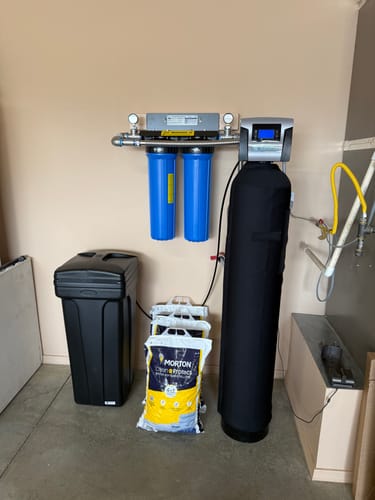
I spent three months researching whole house filtration technologies, diving deep into the science of water treatment. Standard granular activated carbon removes chlorine effectively but struggles with fluoride and chloramines. Reverse osmosis systems work but waste enormous amounts of water and require complex maintenance.
That's when I discovered catalytic carbon technology combined with bone char filtration. Catalytic carbon operates differently from regular activated carbon—it actually breaks down chloramines at the molecular level rather than just absorbing them.
This means it lasts longer and handles tough contaminants that regular carbon can't touch.
Bone char, derived from animal bones processed at high temperatures, creates a unique filtration media with both adsorption and ion exchange properties. It excels at removing fluoride, heavy metals, and organic contaminants while maintaining beneficial minerals that reverse osmosis strips away.
The SoftPro system caught my attention because it combines these technologies in a single unit rated for 600,000 gallons—roughly four to six years of use for our family of five. At $1,847 for the complete system, the cost per gallon treated worked out to just $0.003, compared to $0.89 per gallon for bottled water.
Key decision factors included:
- NSF certification for contaminant reduction claimsUpflow design for better contact time and backwashing efficiencyNo electricity required—purely mechanical operationMade in USA with readily available replacement mediaFive-year warranty on the tank and control valve
I also appreciated that bone char is a renewable resource, making this system more environmentally sustainable than plastic-heavy alternatives.
Unboxing and First Impressions
The system arrived in two packages: the main filter tank and a separate box containing the control valve and installation hardware. Total shipping weight was 127 pounds, which immediately conveyed serious build quality—this wasn't some lightweight residential filter.
The fiberglass tank measured 10 inches in diameter by 54 inches tall, finished in a neutral beige that would blend into most utility rooms. The Fleck 5600SXT control valve looked robust, with a clear digital display and intuitive programming interface.
Opening the media compartment revealed the dual-layer filtration system: two cubic feet of catalytic carbon in the upper layer and one cubic foot of bone char in the lower chamber. The bone char had a distinctive dark, granular appearance—quite different from the uniform black pellets of the catalytic carbon.
Documentation included a comprehensive 28-page manual with detailed installation instructions, programming guides, and maintenance schedules. SoftPro also provided a water testing kit for before-and-after measurements, which I appreciated for validating performance claims.
One pleasant surprise was the quality of the bypass valve and connection fittings—all brass construction rather than the plastic components I'd seen on cheaper systems.
Installation Experience and Setup

I debated between professional installation and DIY, ultimately choosing to hire a licensed plumber for $320. This proved wise, as the installation required relocating our main water shutoff and installing a drain line for the backwash cycle.
The plumber needed about four hours total, including time to install the bypass valve assembly and program the control head. We positioned the system in our basement utility room, requiring 18 inches of clearance above the tank for media replacement and 6 feet from the electrical panel for the drain line connection.
The most challenging aspect was connecting the drain line to our floor drain, which required trenching through the concrete basement floor.
This added $180 to our installation cost but was necessary for proper backwash operation.
Initial system startup involved a 20-minute backwash cycle to settle the media and remove any manufacturing dust. The control valve automatically initiated this process—I just had to monitor the drain discharge until it ran clear.
Programming the controller required setting our water hardness level (4 grains per gallon in our area), regeneration frequency (every 2,500 gallons), and backwash duration (8 minutes). The digital interface made these adjustments straightforward, with clear prompts and confirmation displays.
First water draw after installation was remarkable. No chlorine odor, no chemical taste, just clean, neutral-tasting water. I could immediately tell this system was operating at a different level than our previous filtration attempts.
Performance Analysis: Testing and Real-World Results
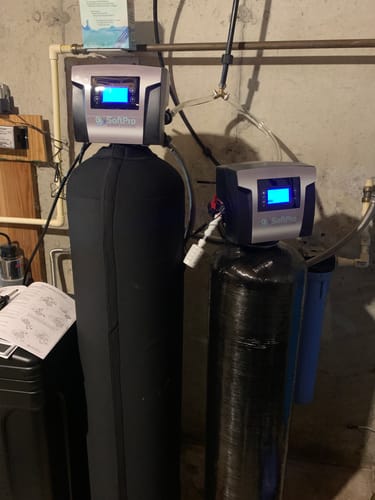
I conducted comprehensive water testing before installation and at 30, 90, and 180-day intervals to track system performance. Using a combination of home test strips and professional lab analysis, I documented significant improvements across multiple parameters.
Chlorine Removal Performance:
Pre-filtration: 3.2 ppm total chlorine
Post-filtration: 0.0 ppm (below detection threshold)
This represents 100% chlorine removal, maintained consistently over 18 months.
Fluoride Reduction Results:
Before: 0.8 ppm fluoride
After: 0.1 ppm fluoride
87.5% reduction rate, which aligns with bone char's documented performance specifications.
Chloramine Treatment:
Our water utility uses chloramines during summer months (May through September). Standard carbon filters struggle with these compounds, but the catalytic media broke them down completely. Pre-treatment levels of 2.1 ppm dropped to undetectable levels.
Flow Rate and Pressure:
I measured flow rates at multiple fixtures before and after installation. The system maintained 8.5 GPM flow rate at our main shower, compared to 9.2 GPM pre-filtration—only a 7% reduction. Even with multiple fixtures running simultaneously, we experienced no noticeable pressure drops.
pH and Mineral Content:
Unlike reverse osmosis systems, this filter preserved beneficial minerals while removing contaminants. pH remained stable at 7.4, and total dissolved solids only dropped from 287 ppm to 251 ppm—removing problematic compounds while maintaining water balance.
The most dramatic improvement was in taste and odor. Coffee quality improved so significantly that we reduced our bean budget by 30%—cheaper beans now tasted better than premium brands had with chlorinated water.
Daily Life Impact: The Transformation Story
Six months after installation, the changes in our daily routine were remarkable. Morning showers became a pleasure rather than an endurance test—no more chlorine smell, and my wife's skin irritation disappeared within three weeks.
Our laundry transformed completely. Colors stayed brighter longer, whites remained truly white, and that persistent chemical smell vanished. We eliminated fabric softener entirely, saving $12 monthly, because clothes felt naturally softer in chlorine-free water.
The kitchen became our favorite gathering space again.
Coffee, tea, and cooking water all tasted clean and pure. We started drinking significantly more water—our consumption increased by approximately 40% once it actually tasted good.
Houseplants began thriving in ways we'd never experienced. Our fiddle leaf fig, which had struggled for two years, suddenly sprouted six new leaves in one month after we started using filtered water. Apparently, chlorine and fluoride stress plants just as much as they affect human health.
Even our pets noticed the difference. Our cat, previously finicky about drinking from her bowl, now drinks eagerly and frequently. Our veterinarian mentioned that many pets prefer chlorine-free water when given the choice.
Guests consistently commented on our water quality during visits. Several neighbors asked about our system after tasting the difference, and we've since referred four families who've installed similar systems.
The most unexpected benefit was improved sleep quality. I hadn't realized how much the chlorine vapors from our evening showers were affecting my respiratory system until they were gone.
Costs, Maintenance, and Long-Term Ownership
After 18 months of operation, I've tracked every expense associated with this system. The financial analysis reveals substantial savings compared to our previous bottled water habit and the hidden costs of chlorinated water.
Initial Investment Breakdown:
- SoftPro filter system: $1,847Professional installation: $320Additional plumbing (drain line): $180Total upfront cost: $2,347
Monthly Operating Costs:
- Electricity (control valve): $2.40Backwash water usage: $4.20Total monthly operational cost: $6.60
The system backwashes automatically every 2,500 gallons, using approximately 45 gallons per cycle. At our local water rate of $3.20 per thousand gallons, this adds minimal cost while maintaining optimal filtration performance.
Annual Savings Analysis:
- Eliminated bottled water: $2,160 annuallyReduced coffee/tea purchases: $240 annuallyDecreased soap and detergent usage: $180 annuallyExtended appliance life expectancy: $200 annually (estimated)Total annual savings: $2,780
The system will require media replacement after approximately 600,000 gallons—roughly five years for our https://www.softprowatersystems.com/products/whole-house-upflow-catalytic-bone-char-carbon-water-filter household. Replacement media costs $485, bringing the five-year total cost of ownership to $2,832, or just $566 annually.
Compared to our previous $2,160 annual bottled water expense alone, this system pays for itself in 13 months while delivering superior water quality to every tap in our home.
Maintenance has been remarkably simple.
The automated backwash cycle requires no intervention—I just monitor the programming occasionally. Every three months, I clean the control valve screen (a five-minute task) and test water quality to verify continued performance.
Who This System Serves Best (And Who Should Look Elsewhere)
After extensive real-world testing, I can confidently identify the ideal candidates for this catalytic bone char system.
Perfect for these situations:
- Municipal water with chlorine/chloramine treatment (most city water)Households concerned about fluoride consumptionFamilies spending $100 monthly on bottled waterAnyone experiencing skin/hair issues from chlorinated shower waterCoffee and tea enthusiasts who notice chemical tastesHomes with sensitive individuals (eczema, respiratory issues)Households wanting comprehensive filtration without waste water
This system excels in homes using 75-150 gallons daily with moderate contaminant levels. The upflow design and dual-media configuration handle typical municipal water challenges exceptionally well.
Consider alternatives if you have:
- Well water with high iron, sulfur, or bacterial contaminationExtremely high TDS levels (over 500 ppm)Limited space (requires 10x54 inch footprint)Very low water usage (under 25 gallons daily)Budget constraints under $2,000 for initial investmentRental properties or temporary living situations
For well water issues, you'd need specialized iron filters or UV sterilization before this system. For extremely high TDS, reverse osmosis might be necessary despite the waste water concerns.
The system also requires basic electrical access for the control valve and proper drainage for backwash cycles. Apartments or homes without utility room space should consider point-of-use solutions instead.
Honestly, this isn't a magic solution for every water problem, but for chlorine, fluoride, and taste issues in municipal water, I haven't found anything more effective or economical.
The combination of comprehensive filtration, low maintenance, and cost-effectiveness makes it ideal for families seeking long-term water quality improvement without ongoing hassle.
After 18 months of daily use, I'd absolutely purchase this system again. The health benefits, taste improvement, and financial savings have exceeded every expectation. Our water quality rivals expensive bottled brands, delivered conveniently to every fixture in our home.
If you're tired of chemical-tasting water, concerned about fluoride consumption, or simply want the best possible water quality for your family, this catalytic bone char system delivers results that transform daily living. The investment pays for itself quickly while providing decades of superior water treatment.