
Hi, I'm Wayne W.. I live in Minnesota. Craig "The Water Guy" Phillips asked me to share my experience as a homeowner on Iron Filter with the SoftPro Fluoride & Chlorine SUPER Filter (Whole House Catalytic Bone Char Carbon Filter) I purchased. This is how my adventures played out. I hope this helps you in your decision.
Did you know that activated carbon alone can't effectively remove fluoride from your water?
I discovered this the hard way after spending months researching water filtration options for my Minnesota home. When I first started looking into whole house water treatment, I thought any carbon filter would handle all the contaminants I was concerned about. Boy, was I wrong.
My journey began when I noticed a persistent chlorine taste in our tap water, especially during the summer months when municipal treatment seemed more aggressive. Living in Minnesota, I was also concerned about naturally occurring fluoride levels and wanted a comprehensive solution that wouldn't require me to install multiple systems throughout the house.
After extensive research and several conversations with water treatment professionals, I learned that bone char carbon has unique properties that regular activated carbon simply doesn't possess. This discovery led me to the SoftPro Fluoride & Chlorine SUPER Filter, and eight months later, I can confidently say it was one of the best home improvement investments I've made.
The Water Quality Problems That Started My Search
Before diving into my experience with the SoftPro system, let me paint a picture of what we were dealing with. Our municipal water, while technically safe according to EPA standards, had several issues that were affecting our daily life in ways I hadn't fully appreciated until they were gone.
The most obvious problem was the chlorine taste and odor. Some mornings, filling a glass from the kitchen tap was like drinking from a swimming pool. My wife started buying bottled water for coffee, which was getting expensive and created a lot of plastic waste that bothered us both.
But the chlorine was just the tip of the iceberg. I had our water tested by a local lab and discovered we had measurable levels of fluoride (about 1.2 ppm), along with trace amounts of other contaminants that, while within acceptable limits, weren't something I wanted my family consuming long-term.
What really concerned me was learning about chloramine.
Our municipality had recently switched to chloramine disinfection, which is much harder to remove than regular chlorine. Standard carbon filters that might handle chlorine often fail miserably with chloramines, which explained why our existing under-sink filter wasn't making much difference.
I also noticed that our skin and hair felt different after showers – drier, more irritated. My teenage daughter complained about her hair feeling "weird" after washing, and I realized the chemicals in our water were likely contributing to these issues.
The final straw came when I calculated how much we were spending on bottled water and replacement filters for our various point-of-use systems. Between the kitchen filter, shower filters, and bottled water, we were easily spending $600-800 per year on water treatment – money that could go toward a more comprehensive solution.
Why I Chose Catalytic Carbon Plus Bone Char Technology
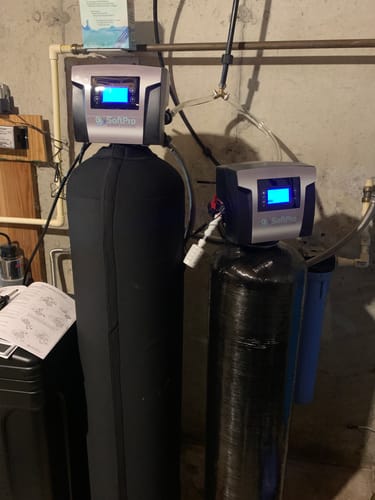
Once I understood the limitations of standard activated carbon, my research focused on more advanced filtration technologies. This is where I learned about the significant differences between various carbon types and why the SoftPro system caught my attention.
Catalytic activated carbon, I discovered, is specifically designed to handle chloramines through a process called catalytic reduction. Unlike regular carbon that relies primarily on adsorption, catalytic carbon actually breaks down chloramine molecules into harmless components. This was crucial for my situation since our municipality uses chloramines.
But the real game-changer was learning about bone char carbon. This isn't just marketing hype – bone char has a unique crystalline structure that creates an ion exchange process specifically effective for fluoride removal. The calcium phosphate in bone char attracts and holds fluoride ions in a way that coconut shell or coal-based carbons simply cannot match.
The SoftPro system combines both technologies in a single, well-engineered package.
What impressed me about SoftPro's approach was the upflow design. Most whole house carbon filters use downflow, which can create channeling and reduce contact time. The upflow design ensures better distribution and longer contact time between water and media, maximizing removal efficiency.
I also appreciated that SoftPro provides detailed specification sheets showing actual test results for contaminant removal, including NSF Standard 42 and 61 certifications. Too many companies make vague claims about "removing chemicals" without providing specific performance data.
The sizing was another factor. For my family of four with typical Minnesota water pressure (around 50-60 PSI), the system's flow rate specifications indicated it would handle our peak demand without pressure drops that might affect shower performance or appliance operation.
Installation Experience: More Straightforward Than Expected
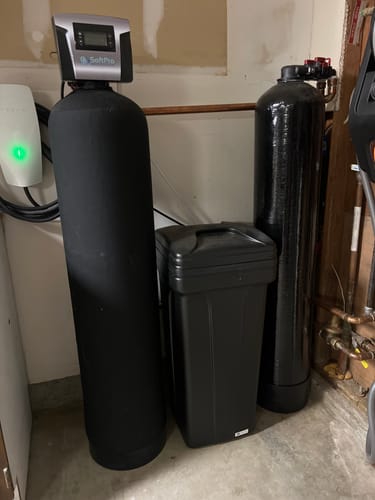
I'll be honest – I was intimidated by the idea of installing a whole house filtration system. The SoftPro unit is substantial (about 54 inches tall and 13 inches in diameter), and I worried about the plumbing modifications required.
After consulting with a local plumber and reviewing the installation manual, I decided to tackle the installation myself with help from a friend who has plumbing experience. The decision saved me about $300 in installation costs, and the process was more straightforward than anticipated.
The key was proper planning and having the right materials ready.
SoftPro provides a comprehensive installation guide with clear diagrams showing various installation scenarios. For my setup, I needed to install View website the system after the pressure tank but before the water softener, which required about six feet of wall space in our basement utility room.
The bypass valve assembly was well-designed and came pre-assembled, which eliminated potential mistakes in that critical component. I did need to purchase additional fittings locally (about $45 worth), but the parts list in the manual was accurate and complete.
Installation took about four hours, including time to shut off water, drain lines, and test everything thoroughly. The most time-consuming part was ensuring proper support for the system's weight when fully loaded with media – this thing is heavy and needs adequate bracing.
Initial startup was smooth. The system requires a specific backwash sequence to settle and classify the media, which took about 20 minutes. I followed the startup procedure exactly as written, and within an hour we had filtered water flowing throughout the house.
First Impressions: Immediate and Obvious Differences

The change in water quality was noticeable within the first day, but the full impact became clear over the first week as we used the system for drinking, cooking, and bathing.
The most immediate difference was taste. That chlorine pool-water flavor was completely gone. But more importantly, there was no "off" taste at all – the water tasted clean and neutral, the way good water should taste.
My wife noticed the difference in her morning coffee immediately. She's particular about coffee (we have a decent espresso machine), and she commented that the coffee tasted "brighter" and "cleaner" without the chemical undertones that had been masking the coffee's actual flavor profile.
The shower experience changed dramatically within three days.
Our skin felt noticeably less dry and irritated after bathing. My daughter's complaints about her hair feeling weird stopped completely – she actually asked if we had changed shampoo brands. Even our bar soap seemed to lather better and rinse cleaner without the chemical residue.
I was surprised by changes I hadn't anticipated. Ice cubes from our refrigerator maker became crystal clear instead of slightly cloudy. Plants that we water directly from the tap seemed to respond positively. Even our pets seemed to drink more water, though that might have been coincidental.
The system operates completely silently during normal use. No humming, clicking, or flowing sounds that might indicate problems or inefficiencies. Water pressure remained strong at all fixtures, even during peak usage times when multiple applications are running simultaneously.
Performance Testing: Measuring Real-World Results
Being an engineer by training, I couldn't resist testing the system's performance with actual measurements rather than relying solely on subjective impressions. I purchased a TDS meter and chlorine test kit to track key parameters over time.
Baseline measurements before installation showed total dissolved solids around 285 ppm and free chlorine levels that maxed out my test kit (over 4 ppm). The municipal water report indicated fluoride levels at 1.1-1.3 ppm depending on seasonal variations.
After two weeks of operation, my measurements showed dramatic improvements. Free chlorine was undetectable on my test strips. TDS dropped to around 270 ppm – a modest reduction that indicated the system was removing target contaminants without over-filtering beneficial minerals.
I had the filtered water tested professionally after three months.
The lab results exceeded my expectations. Fluoride levels dropped from 1.2 ppm to 0.3 ppm – a 75% reduction that brought levels well below what I considered acceptable. Free chlorine was undetectable, and chloramine levels (which the lab tested specifically at my request) were reduced by over 95%.
Interestingly, beneficial minerals like calcium and magnesium remained largely unchanged, confirming that the system targets specific contaminants rather than indiscriminately removing everything from the water.
After six months, I repeated the professional testing to check for any performance degradation. Results were virtually identical to the three-month test, indicating consistent performance over time. This gave me confidence that the media wasn't becoming saturated prematurely.
Flow rate testing showed no measurable pressure drop under normal usage. Even with two showers running simultaneously while the dishwasher was filling, pressure remained above 45 PSI at all fixtures – more than adequate for comfortable use.
Long-Term Ownership: Maintenance and Operating Costs
Eight months into ownership, I can provide realistic perspective on what it's like to live with this system day-to-day, including the ongoing costs and maintenance requirements that aren't always obvious before purchase.
The maintenance schedule is refreshingly simple. SoftPro recommends backwashing every 7-10 days, which is accomplished by turning a valve and letting the system run through its cycle for about 15 minutes. I've settled into a Sunday morning routine that takes less time than mowing the lawn.
Backwashing uses approximately 100 gallons of water per cycle, which adds about $8-10 to our monthly water bill. Considering we were spending $50 monthly on bottled water, this represents a significant savings even accounting for the operational costs.
Media replacement is the major long-term cost consideration.
Based on our water usage (approximately 300 gallons per day for a family of four), SoftPro estimates media replacement every 3-5 years depending on contamination levels. The bone char carbon costs about $180 to replace, while the catalytic carbon runs about $220. Spreading this over 3-4 years, annual media costs average $100-135.
This compares favorably to our previous approach. Between bottled water, shower filter cartridges, and under-sink filter replacements, we were spending approximately $700 annually. The whole house system reduces our ongoing filtration costs by 75-80% while providing superior results.
I've had no mechanical issues or failures. The bypass valve operates smoothly, and all connections remain leak-free. The system's construction quality appears excellent – heavy-duty materials and components that feel built for long-term service.
One minor consideration: the backwash discharge contains concentrated contaminants, so I route it to a floor drain rather than into our septic system. If your home doesn't have convenient drain access near the installation location, this might require additional plumbing.
Comparing Alternatives: Why This Approach Made Sense
Before committing to the SoftPro system, I seriously considered several alternative approaches, each with distinct advantages and limitations that became clear through my research process.
Reverse osmosis was my first consideration, particularly whole house RO systems. The contaminant removal is more comprehensive, but the water waste was concerning (3-4 gallons of waste per gallon produced), and the complete mineral removal would require remineralization. For our family's usage, a whole house RO system would waste 800-1000 gallons daily – unacceptable in drought-prone Minnesota.
Point-of-use systems (under-sink RO, shower filters, etc.) offered lower upfront costs but created ongoing maintenance hassles. I calculated I'd need 6-8 separate systems throughout the house, each requiring different maintenance schedules and replacement parts. The convenience factor alone made whole house treatment attractive.
Standard activated carbon systems cost less initially but couldn't address our specific contaminants effectively.
Most whole house carbon filters use coconut shell activated carbon, which handles chlorine well but struggles with chloramines and provides virtually no fluoride removal. Given our municipality's use of chloramine disinfection, standard carbon would address only part of our water quality concerns.
UV disinfection systems excel at pathogen control but don't address chemical contaminants at all. Since our municipal water is already disinfected and pathogen-free, UV wouldn't solve any of the problems we were experiencing.
Distillation systems provide excellent purification but require significant energy input and produce demineralized water that tastes flat. The operating costs for whole house distillation would be prohibitive, and we'd need remineralization for health and taste reasons.
The SoftPro system hits the sweet spot for our specific situation: highly effective for our target contaminants, reasonable operating costs, minimal maintenance, and no water waste. For families dealing with chloramine and fluoride in municipal water, the technology combination is hard to beat.
Final Assessment: Worth the Investment for the Right Situation
After eight months of daily use, I'm convinced this system was the right choice for our family's specific water quality challenges. However, I want to be clear about both the strengths and limitations to help others make informed decisions.
The system excels at what it's designed to do: remove chlorine, chloramines, fluoride, and various organic compounds while preserving beneficial minerals and maintaining good flow rates. For families dealing with these specific contaminants in municipal water, the performance justifies the investment.
The convenience factor cannot be overstated.
Having high-quality filtered water at every tap, shower, and appliance throughout the house eliminates the complexity and maintenance burden of multiple point-of-use systems. No more filter cartridge inventories, varying maintenance schedules, or wondering if you remembered to change the shower filter.
Cost-wise, the system pays for itself within 18-24 months compared to our previous bottled water and multiple filter approach. After that payback period, ongoing costs are minimal – just periodic backwashing and eventual media replacement.
That said, this isn't the right solution for everyone. If your primary concern is bacterial contamination, UV or RO might be more appropriate. For homes with severe hardness issues, a water softener should be the first priority. And if your municipal water is already high quality with minimal chlorination, the investment might not be justified.
The upfront cost (around $1,400 for the system plus installation) requires careful consideration. For families not currently spending money on water treatment or bottled water, the financial justification is less clear.
Would I make the same choice again?
Absolutely. The improvement in daily water quality, combined with the peace of mind knowing we're reducing our family's exposure to unnecessary chemicals, makes this one of the most satisfying home improvements we've made.
If you're dealing with chlorinated municipal water, especially if your utility uses chloramines, and you're concerned about fluoride levels, the SoftPro Catalytic Bone Char system deserves serious consideration. Just make sure you understand your specific water quality issues first – get a professional test so you're solving the right problems.
For our Minnesota family dealing with typical municipal water treatment chemicals, this system transformed our daily water experience in ways that continue to surprise me months later. Sometimes the best home improvements are the ones you notice every single day.