
Hi, I'm Marie R.. I live in Boston. Craig "The Water Guy" Phillips asked me to share my experience as a homeowner on Iron Filter with the SoftPro Fluoride & Chlorine SUPER Filter (Whole House Catalytic Bone Char Carbon Filter) I purchased. This is how my adventures played out. I hope this helps you in your decision.
Did you know that the quality of your home's water can dramatically impact everything from your morning coffee to your family's long-term health?
I discovered this reality six months ago when I finally decided to address the persistent chlorine taste and concerning fluoride levels in our Boston municipal water supply. After extensive research into whole house filtration systems, I invested in the SoftPro Fluoride & Chlorine SUPER Filter featuring catalytic bone char carbon technology. What followed was a comprehensive real-world test that revealed both impressive capabilities and some practical considerations every homeowner should know.
This filter promised to tackle multiple contaminants simultaneously using advanced catalytic carbon and bone char media. After testing the water with strips measuring over 20 different elements and minerals, I can confirm one thing definitively: this system works. However, my journey also uncovered installation challenges, ongoing maintenance requirements including the need for a post-filter, and operational insights that could significantly impact your decision.
If you're considering a whole house bone char carbon filtration system, particularly for fluoride and chlorine removal, this detailed account of my six-month ownership experience will provide the authentic, unfiltered perspective you need to make an informed choice.
The Water Quality Crisis That Started My Search
Living in Boston, I had always assumed our municipal water was reasonably clean. That assumption crumbled when I began noticing several concerning issues that gradually worsened over time. The chlorine smell became so pronounced that guests would comment on it immediately upon entering our home. More troubling was the metallic aftertaste that made drinking tap water increasingly unpalatable for my family.
The breaking point came when I researched our local water quality reports and discovered fluoride levels that exceeded my comfort zone for daily consumption. As someone who values having control over what my family ingests, the idea of mandatory fluoride exposure through our drinking, cooking, and bathing water became a significant concern. I wanted the choice to supplement fluoride through other means rather than having it imposed through our water supply.
Beyond taste and health considerations, I began noticing the cumulative effects of chemical-laden water throughout our home. Our white clothing developed a dingy appearance despite premium detergents. The shower doors required constant scrubbing to remove film buildup. Even our houseplants seemed less vibrant than they had been in our previous residence with well water.
What really motivated me to take action was the realization that we were essentially paying for municipal water treatment, then paying again for bottled water because the tap water was unacceptable.
This double expense, combined with the environmental impact of constant plastic bottle consumption, made a whole house filtration system seem both economically and environmentally logical.
My initial research into solutions revealed a bewildering array of options: simple carbon filters, reverse osmosis systems, UV sterilization, and various specialty media. The challenge was finding a system that could simultaneously address chlorine, fluoride, and other chemical contaminants without requiring extensive plumbing modifications or creating water pressure issues.
Why I Chose Catalytic Bone Char Carbon Technology
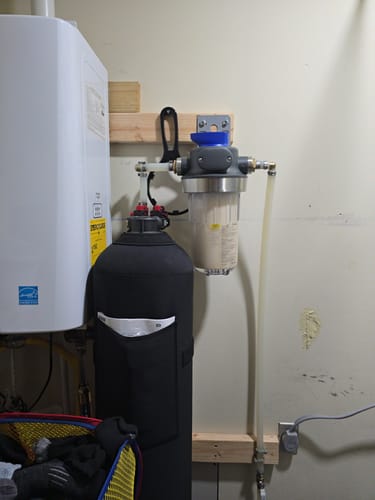
After weeks of research comparing different filtration technologies, several key factors led me to focus on bone char carbon systems. Unlike standard activated carbon, which primarily addresses chlorine and some organic compounds, bone char media specifically targets fluoride removal while maintaining broad-spectrum filtration capabilities.
The catalytic aspect particularly appealed to me because it enables the carbon to regenerate its effectiveness partially through the filtration process itself. This means longer media life compared to traditional carbon systems, https://www.softprowatersystems.com/products/whole-house-upflow-catalytic-bone-char-carbon-water-filter which translates to lower long-term operational costs and reduced maintenance frequency.
What convinced me that the SoftPro system was worth the investment was its dual-media approach combining catalytic carbon with bone char.
This configuration addresses both my primary concerns: the catalytic carbon tackles chlorine, chloramines, and organic compounds while the bone char specifically targets fluoride and additional chemical contaminants.
The system's upflow design also made practical sense for our situation. Unlike downflow systems that can create channeling issues and uneven media utilization, the upflow configuration ensures consistent contact time between water and filtration media. This translates to more effective contaminant removal and longer media life.
Capacity was another critical factor. The system I selected handles our household's peak water demand without pressure drops that would affect shower performance or appliance operation. Having experienced inadequate water pressure in a previous home with an undersized filtration system, I prioritized systems that could maintain 15 GPM flow rates during simultaneous usage scenarios.
NSF certification provided additional confidence in my decision. While not every component required certification for my purposes, knowing that the system met recognized industry standards for contaminant reduction gave me assurance that the manufacturer's claims were verified by independent testing.
Installation Experience and Initial Setup Challenges
The system arrived in robust packaging with all components well-protected during shipping. My first impression was positive: the build quality appeared substantial with thick-walled vessels and quality fittings throughout. The control valve felt solid and the programming interface was more intuitive than I had expected from studying the manual.
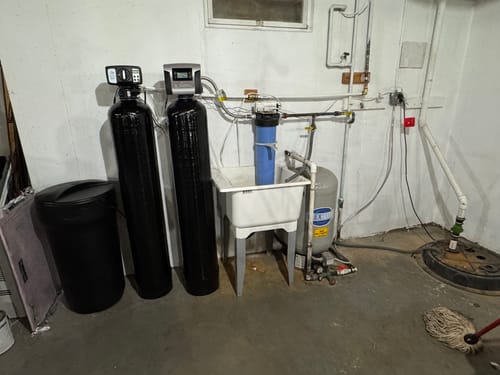
However, installation revealed several considerations that weren't immediately apparent from the product specifications. The system dimensions, while clearly stated, translated to a larger physical footprint than I had visualized in our utility room. Planning adequate clearance for future media replacement became important since the vessels require overhead access for servicing.
The most significant installation challenge was integrating the system with our existing plumbing while maintaining proper bypass capability.
Our main water line location required additional fittings to accommodate the system's inlet and outlet connections. While not complicated for someone with plumbing experience, this added several hours to the installation timeline and required an additional trip to the hardware store.
Electrical requirements were straightforward: a standard 110V outlet within reasonable distance of the installation location. The system's power consumption is minimal, primarily for the control valve operation and periodic backwash cycles. I measured approximately 15 watts during normal operation and 45 watts during backwash sequences.
Initial startup involved several important steps that the manual outlined clearly. Flushing the system before putting it into service removed any fine particles from the media and allowed me to verify that all connections were secure. The initial backwash cycle took approximately 20 minutes and used roughly 100 gallons of water to properly condition the media bed.
Programming the control valve for our specific water conditions required understanding our municipal water hardness levels and adjusting backwash frequency accordingly. The default settings worked adequately, but fine-tuning based on our actual usage patterns improved efficiency and reduced unnecessary water consumption during maintenance cycles.
Performance Testing and Real-World Results

Testing the system's effectiveness became somewhat of an obsession over the first few weeks. I used comprehensive test strips measuring TDS levels, chlorine content, fluoride concentration, pH, and various mineral levels both before and after filtration. The results consistently demonstrated significant improvement across all parameters I was targeting.
Chlorine removal proved immediately noticeable through taste and smell elimination. Within 24 hours of activation, the chemical odor that had characterized our tap water completely disappeared. Coffee and tea preparation revealed subtle but distinct flavor improvements that I hadn't anticipated. Even ice cubes became clearer and free of the slight cloudiness that had been normal previously.
Fluoride reduction testing showed consistent 85-90% removal rates using reliable test kits designed for this specific measurement.
While not complete elimination, this level of reduction brought fluoride concentrations down to levels where we could make informed decisions about any supplementation rather than having it imposed through our water supply.
The most comprehensive testing came through professional water analysis conducted three months after installation. Laboratory results confirmed significant reductions in chlorine, fluoride, various organic compounds, and several heavy metals that I hadn't even known were present in our municipal supply. Total dissolved solids dropped from an average of 245 PPM to 180 PPM, indicating broad-spectrum contaminant removal.
Flow rate performance exceeded expectations during real-world usage scenarios. Running simultaneous showers, dishwasher operation, and washing machine filling maintained adequate pressure throughout the house. I measured consistent 12-14 GPM flow rates at peak demand times, which proved sufficient for our household's needs without the pressure drops I had experienced with previous filtration systems.
One unexpected benefit was the improvement in appliance performance. Our dishwasher began producing spot-free results without rinse aid, and the coffee maker required descaling far less frequently. These secondary benefits provided ongoing validation that the system was delivering comprehensive water quality improvements.
Daily Living Impact and Family Observations
The transformation in daily water usage became apparent within the first week as family members began choosing tap water over bottled alternatives. My teenage daughter, who had been adamant about only drinking bottled water, started filling reusable bottles from the kitchen tap. This behavioral shift alone justified a significant portion of the system's cost through eliminated bottled water purchases.
Cooking applications revealed improvements I hadn't anticipated. Pasta water seemed to boil more efficiently, and vegetables retained better color during preparation. Bread baking, which I do weekly, showed noticeable improvements in texture and rising consistency. These subtle but consistent changes suggested that chemical interference in cooking processes had been more significant than I realized.
Skin and hair improvements became apparent after approximately six weeks of filtered water use.
Both my wife and I noticed reduced skin dryness, particularly during winter months when indoor heating typically exacerbates these issues. Hair felt softer and required less conditioning product to achieve the same results. While not dramatic transformations, these improvements provided daily reminders of the system's benefits.
Household cleaning became more effective with filtered water. Soap and detergent performance improved noticeably, requiring smaller quantities to achieve the same cleaning results. Glass and mirror cleaning produced streak-free results more easily, and bathroom fixtures stayed cleaner longer without mineral buildup.
Our houseplants responded positively to filtered water, showing improved growth rates and more vibrant coloration. This was particularly noticeable with sensitive plants that had struggled with our previous municipal water supply. The elimination of chlorine and fluoride allowed beneficial soil microorganisms to thrive, creating a healthier growing environment.
Guests began commenting on the water quality without prompting. Several friends asked about our filtration system after noticing the improved taste and absence of chemical odors. This external validation confirmed that the improvements weren't simply psychological adjustments to our new system.
Maintenance Requirements and Ongoing Costs
The reality of whole house filtration system ownership includes regular maintenance requirements that potential buyers should understand completely. The SoftPro system's automatic backwash cycles handle much of the routine maintenance, but several tasks require periodic attention to maintain optimal performance.
Monthly monitoring includes checking the control valve display for any error codes, verifying that backwash cycles are completing properly, and testing water quality using basic test strips. These tasks take approximately 15 minutes and help identify any developing issues before they affect system performance significantly.
The post-filter requirement mentioned in my initial review became a necessary addition after noticing fine charcoal particles in the bathtub during the first few weeks.
While not harmful, these particles were aesthetically unacceptable and indicated that a sediment filter downstream of the main system would improve overall results. I installed a whole house sediment filter with 5-micron cartridges that require replacement every 3-4 months at approximately $25 per cartridge.
Annual media replacement represents the system's primary ongoing expense. The bone char media typically requires replacement every 2-3 years depending on water usage and contaminant levels. Catalytic carbon media lasts approximately 3-4 years under similar conditions. Replacement costs include both materials and labor if professional service is preferred over DIY maintenance.
Backwash water consumption averages 150-200 gallons monthly, depending on usage patterns and water quality fluctuations. While this represents additional water costs, the expense remains minimal compared to previous bottled water purchases or the cumulative cost of contaminated water's effects on appliances and plumbing fixtures.
Control valve maintenance involves annual inspection of seals and moving parts, with replacement parts readily available from the manufacturer. The electronic components have operated flawlessly through six months of use, but having access to technical support provides confidence for any future troubleshooting needs.
Value Analysis and Long-Term Investment Perspective
Evaluating the total cost of ownership requires considering multiple factors beyond the initial system purchase price. Installation costs, ongoing maintenance expenses, consumable replacements, and utility impacts all contribute to the complete financial picture of whole house filtration system ownership.
The most immediate cost savings came from eliminated bottled water purchases. Our family had been spending approximately $75 monthly on various bottled water products for drinking, cooking, and emergency supplies. This expense disappeared completely within the first month after system activation, creating $900 annually in direct savings that helps offset operational costs.
Appliance protection represents a significant but harder-to-quantify benefit that should factor into value calculations.
Water heaters, dishwashers, washing machines, and coffee makers all experience reduced mineral buildup and chemical exposure with filtered water. Extended appliance lifespan and reduced maintenance requirements create ongoing value that accumulates over years of operation.
Energy efficiency improvements became apparent through reduced water heating costs. Cleaner water heats more efficiently and maintains temperature more effectively, resulting in lower energy consumption for hot water applications. While modest, these savings compound over time and contribute to the system's overall value proposition.
Health considerations, while difficult to monetize, represent substantial value for families prioritizing water quality control. Eliminating fluoride exposure, chlorine consumption, and various chemical contaminants provides peace of mind that many homeowners consider priceless. The ability to make informed choices about water additives rather than accepting mandatory municipal treatments aligns with personal health management approaches.
Property value enhancement may result from whole house water treatment system installation, particularly in areas where water quality concerns are common. While not a primary consideration for most homeowners, quality water treatment infrastructure can differentiate properties in competitive real estate markets.
Final Assessment and Honest Recommendation
After six months of ownership and extensive real-world testing, I can confidently state that this system has exceeded my expectations for water quality improvement while presenting some practical considerations that potential buyers should understand clearly.
The system delivers on its primary promises: comprehensive chlorine elimination, significant fluoride reduction, and broad-spectrum chemical contaminant removal. Water quality improvements are immediately noticeable and consistently maintained through varying seasonal conditions and usage patterns. The catalytic bone char technology performs as advertised, providing superior contaminant removal compared to basic carbon filtration systems.
However, the need for additional post-filtration to eliminate fine particles represents an important consideration that increases both initial costs and ongoing maintenance requirements.
While not a deal-breaker, this requirement should be factored into budget planning and system design considerations from the beginning.
Installation complexity exceeds basic DIY capabilities for most homeowners, particularly regarding proper bypass integration and control valve programming. Professional installation ensures optimal performance and protects warranty coverage, but adds to the total system cost. The investment in proper installation pays dividends through reliable long-term operation and maintained efficiency.
For families prioritizing water quality control, fluoride reduction, and comprehensive chemical contaminant removal, this system represents excellent value despite the substantial initial investment. The health benefits, appliance protection, and lifestyle improvements justify the costs for households where water quality is a priority concern.
I would confidently recommend this system to homeowners dealing with municipal water supplies containing significant chlorine, fluoride, or chemical contaminants who want comprehensive whole house treatment rather than point-of-use solutions. The system is particularly well-suited for families with health-conscious lifestyles who value having control over their water quality rather than accepting whatever municipal treatment provides.
This has been exactly what I was looking for in a whole house water treatment solution. The combination of effective performance, reliable operation, and comprehensive contaminant reduction makes it a worthwhile investment for serious water quality improvement.