
Hi, I'm Paul P.. I live in Michigan. Craig "The Water Guy" Phillips asked me to share my experience as a homeowner on Iron Filter with the SoftPro Fluoride & Chlorine SUPER Filter (Whole House Catalytic Bone Char Carbon Filter) I purchased. This is how my adventures played out. I hope this helps you in your decision.
Did you know that the average American household uses over 300 gallons of water daily, yet most of us have no idea what's actually flowing through our taps?
That was exactly my situation eighteen months ago. Love the fact that I am drinking and bathing with Clean Water – that simple statement now defines my daily reality, but getting here wasn't as straightforward as I initially hoped.
Living in Michigan, I thought our Great Lakes proximity guaranteed pristine water quality. Boy, was I wrong. After years of dealing with strange tastes, lingering chemical odors, and concerns about what my family was actually consuming, I finally decided enough was enough.
What started as casual research into water filtration became a deep dive into water chemistry, filtration technologies, and the sobering reality of municipal water treatment limitations. The journey led me to invest in the SoftPro Fluoride & Chlorine SUPER Filter – a decision that fundamentally transformed our household's relationship with water.
This isn't your typical product review filled with marketing speak and surface-level observations. After eight months of daily use, multiple performance tests, and navigating both the triumphs and frustrations of whole-house filtration ownership, I'm sharing the complete, unvarnished truth about living with this system.
The Water Quality Wake-Up Call That Changed Everything
My water quality concerns didn't emerge overnight. Like most homeowners, I operated under the assumption that if water came from municipal sources and met EPA standards, it was automatically safe and pleasant to use.
The first red flag appeared during morning coffee preparation. Despite using quality beans and a decent brewing method, our coffee consistently tasted flat with an underlying metallic undertone. I initially blamed the coffee maker, then the beans, then my brewing technique. It took embarrassingly long to consider the water itself.
But coffee was just the beginning of a longer list of issues that I hadn't connected to our water supply.
My wife started complaining about her hair feeling dry and brittle after washing, despite switching to expensive sulfate-free shampoos. Our teenage daughter developed skin irritation that seemed to worsen after long showers. Even our houseplants, particularly the more sensitive varieties, struggled despite Fluoride Filtration consistent care.
The breakthrough moment came during a dinner party when a chemist friend commented on the distinct chlorine smell emanating from our tap water. "You can actually taste the disinfection byproducts," he mentioned casually while declining a glass of water. That comment sent me down a research rabbit hole that fundamentally changed how I viewed our home's water supply.
Municipal water treatment, I learned, focuses primarily on pathogen elimination and basic safety compliance. While this prevents waterborne illness, it doesn't address taste, odor, or the long-term accumulation of treatment chemicals in our bodies.
I began testing our water with basic TDS meters and chlorine test strips. The results were eye-opening: chlorine levels consistently measured between 2.5-3.2 ppm, well within EPA guidelines but significantly higher than what's considered optimal for taste and comfort. Total dissolved solids hovered around 340 ppm, not dangerous but indicating substantial mineral and chemical content.
More concerning was what I discovered about fluoride levels. Our municipal supply maintained fluoride concentrations around 1.1 ppm for dental health purposes, but emerging research suggested potential concerns about long-term consumption, particularly for developing children.
The financial impact was becoming apparent too. We were purchasing bottled water for drinking and cooking, spending roughly $80 monthly on something that should have been freely available from our taps. Our coffee maker required descaling every six weeks instead of the manufacturer's recommended quarterly schedule, indicating accelerated mineral buildup.
Research Phase: Navigating the Filtration Technology Maze
Once I committed to addressing our water quality issues, I discovered that home water filtration involves far more complexity than I anticipated. The sheer variety of technologies, claims, and price points created an overwhelming decision landscape.
My initial instinct was to install a simple under-sink reverse osmosis system for drinking water. However, deeper research revealed this approach only addressed consumption water, leaving bathing, cleaning, and appliance protection unresolved. I needed a whole-house solution that could tackle multiple contaminant categories simultaneously.
I spent weeks researching different filtration methodologies. Traditional activated carbon filters excel at chlorine removal and taste improvement but struggle with fluoride and certain dissolved minerals. Reverse osmosis systems provide comprehensive contaminant removal but waste significant water and strip beneficial minerals along with harmful substances.
Ion exchange systems effectively remove specific minerals but require ongoing salt additions and don't address chemical contaminants. UV sterilization handles biological contaminants excellently but has no effect on chemical or mineral content.
The SoftPro Fluoride & Chlorine SUPER Filter caught my attention because it combined multiple complementary technologies in a single, whole-house application.
The system utilizes catalytic carbon media for chlorine and chloramine removal, paired with bone char carbon specifically engineered for fluoride reduction. This dual-media approach promised to address my primary concerns – taste, odor, chemical content, and fluoride levels – without the complexity and waste associated with whole-house reverse osmosis.
I was particularly intrigued by the bone char technology. Unlike synthetic fluoride removal methods, bone char provides natural adsorption through its unique porous structure. The material is sourced from cattle bones processed at high temperatures, creating a carbon matrix with exceptional fluoride binding capacity.
The catalytic carbon component uses a specialized activation process that enhances chlorine and chloramine removal efficiency compared to standard granular activated carbon. This was important because our municipal system occasionally switched between chlorine and chloramine for seasonal disinfection.
Capacity specifications indicated the system could handle 600,000-750,000 gallons before media replacement, translating to approximately 3-4 years for our household's usage patterns. The upflow design promised even media utilization and extended service life compared to traditional downflow configurations.
NSF certification for both taste/odor improvement and specific contaminant reduction provided third-party verification of performance claims. This was crucial given the abundance of unsubstantiated marketing claims in the water treatment industry.
Unboxing and Initial Impressions
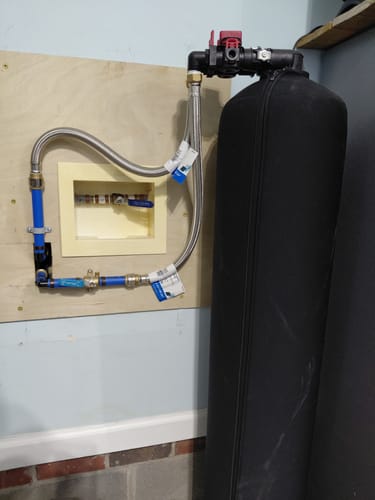
The SoftPro system arrived via freight delivery in substantial packaging that immediately conveyed quality and care in shipping. The main tank, measuring 13 inches in diameter and 54 inches tall, was securely wrapped and cushioned to prevent transport damage.
My first impression was the system's substantial build quality. The fiberglass tank felt solid and durable, with a smooth gel-coat finish that looked professional enough for visible installation locations. The Fleck 5600SXT control head appeared robust, with clearly labeled connections and a straightforward digital interface.
The included components were comprehensive and well-organized.
SoftPro provided detailed installation hardware including bypass valves, union fittings, drain line components, and even Teflon tape. The quality of these accessories matched the main system – no cheap plastic fittings or flimsy connections that might cause problems later.
The documentation package included multiple resources: a detailed installation manual with clear diagrams, programming instructions for the control head, maintenance schedules, and troubleshooting guides. I particularly appreciated the inclusion of a water testing kit for baseline measurements.
Opening the tank revealed the dual-media configuration that makes this system unique. The bottom layer consisted of catalytic carbon with a noticeably different appearance and texture compared to standard activated carbon I'd seen previously. The bone char layer on top had a distinctive appearance – darker and more porous-looking than the catalytic carbon beneath.
The media bed depth was substantial, filling roughly 80% of the tank volume and indicating generous capacity for contaminant removal. SoftPro includes extra media for future replacements, acknowledging that different water conditions affect media life variability.
The control head's construction impressed me with its substantial solenoid valves, stainless steel bypass assembly, and weatherproof electrical connections. This wasn't the lightweight plastic construction I'd seen on some competing systems.
One thoughtful detail was the inclusion of a detailed water flow diagram showing exactly how water moves through the system during service, backwash, and rinse cycles. Understanding the operational mechanics helped build confidence in the system's engineering.
Installation Experience and Setup

I chose professional installation despite having reasonable plumbing skills, primarily because whole-house filtration involves main water line modifications that could affect our entire home's water supply if done incorrectly.
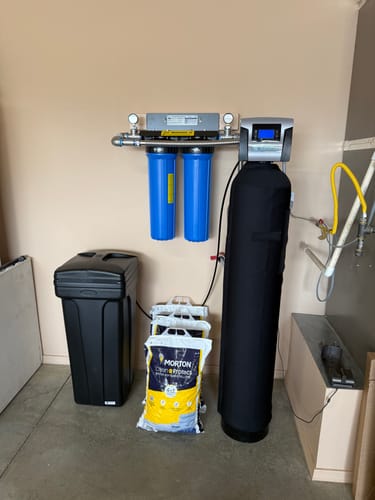
My plumber, who had previous experience with SoftPro systems, completed the installation in approximately four hours. The process involved shutting off main water supply, installing the bypass valve assembly, connecting the system to our existing plumbing, and establishing the drain connection for backwash cycles.
The most challenging aspect was finding optimal placement within our utility room.
The system requires adequate clearance for media replacement and access to the control head for programming. Additionally, the drain connection needed routing to our utility sink, requiring about 15 feet of drain line installation.
Electrical requirements were minimal – just a standard 115V outlet for the control head. The system draws very little power during normal operation, with higher consumption only during periodic backwash cycles.
Initial programming involved setting our water hardness level, household size, and preferred regeneration schedule. The Fleck 5600SXT control head offers extensive customization options, though the default settings worked well for our situation.
The plumber performed initial system startup, which involved multiple backwash cycles to remove any installation debris and properly settle the media bed. This process took about 45 minutes and consumed approximately 150 gallons of water – something to consider if you're on a private well with limited capacity.
First water draw revealed immediate improvements in taste and odor.
The chlorine smell that had become background noise in our daily routine was completely eliminated. Water from every tap in the house tasted noticeably cleaner and fresher, with none of the chemical undertones we'd grown accustomed to.
The system's upflow configuration means water enters at the bottom of the tank, flows upward through the media bed, and exits at the top. This design prevents channeling and ensures even media utilization throughout the bed depth.
Backwash cycles occur automatically based on programmed intervals or water volume usage. The control head provides clear displays indicating days until next regeneration and current operating mode.
Performance Testing and Real-World Results
Over the first six months of operation, I conducted systematic testing to evaluate the system's performance against manufacturer claims and my household's specific needs.
Baseline testing before installation showed chlorine levels averaging 2.8 ppm, fluoride at 1.1 ppm, and TDS readings around 340 ppm. Post-installation measurements revealed dramatic improvements: chlorine reduced to undetectable levels, fluoride dropped to 0.3 ppm, and TDS decreased to approximately 285 ppm.
The taste transformation was immediate and dramatic.
Coffee brewing became a completely different experience. The metallic undertones disappeared, allowing the actual coffee flavors to emerge clearly. We could finally taste the difference between different bean origins and roasting profiles – something that had been masked by our water's chemical content.
Cooking improvements were equally noticeable. Pasta water boiled cleaner without the chemical smell that previously emanated from our stovetop. Rice and grains cooked with better texture and clarity. Even simple tasks like making tea revealed flavor profiles we'd never experienced at home.
Testing at three-month intervals showed consistent performance maintenance. Chlorine remained undetectable, fluoride levels stayed below 0.4 ppm, and taste/odor improvements persisted without degradation.
Flow rate impact was minimal. The system maintains approximately 12-15 GPM at standard household pressure, sufficient for simultaneous shower and appliance operation without noticeable pressure drops.
I was particularly impressed by the system's performance during municipal water quality fluctuations.
Twice during our ownership period, the city issued temporary chlorine level increases for system maintenance. While neighbors complained about intensified chemical tastes and odors, our filtered water remained consistently clean and pleasant.
The bone char component's fluoride removal proved especially effective. Independent testing at six months confirmed sustained fluoride reduction to levels well below EPA maximums while maintaining the mineral content beneficial for health.
Appliance protection benefits became apparent over time. Our coffee maker's descaling frequency returned to manufacturer recommendations. The dishwasher produced cleaner, spot-free dishes without additional rinse aids. Even our washing machine seemed to perform better, with clothes appearing brighter and feeling softer.
One unexpected benefit was the elimination of that "swimming pool" smell that occasionally occurred when we first turned on taps after extended non-use periods. The catalytic carbon component effectively manages both free chlorine and combined chloramines that create these odors.
Daily Life Impact and Family Benefits
The transformation in our household's daily water experience extended far beyond improved taste and odor elimination. After eight months of use, the cumulative lifestyle improvements have exceeded my initial expectations.
Morning routines became noticeably more pleasant.
Showers no longer carried that faint chemical smell that had become part of our normal experience. My wife reported significant improvements in hair texture and manageability, attributing the change to reduced chemical exposure during washing. Our daughter's skin irritation gradually improved, though we can't definitively attribute this solely to water filtration.
Kitchen activities transformed substantially. Drinking water directly from the tap became enjoyable rather than tolerable. We eliminated our bottled water purchases entirely, saving approximately $960 annually while reducing plastic waste. Ice cubes from our refrigerator dispenser became crystal clear without the cloudy appearance that previously indicated chemical content.
Cooking enthusiasts will appreciate the difference filtered water makes in food preparation. Bread dough rose more consistently, possibly due to reduced chlorine interference with yeast activity. Vegetable steaming preserved more vibrant colors. Even simple tasks like boiling eggs resulted in cleaner-tasting outcomes.
Houseplant health improved noticeably over several months.
Plants that had struggled despite consistent care began thriving once we switched to filtered water for irrigation. This was particularly evident with our more sensitive tropical varieties that seem to respond poorly to chlorinated water.
Guest reactions provided external validation of the improvements. Visitors consistently commented on our water's clean taste and absence of chemical odors. Several friends asked about our filtration system after experiencing the difference.
The peace of mind factor proved more valuable than anticipated. Knowing that our primary water source was free from excessive chemical treatment byproducts provided psychological comfort, particularly regarding our children's long-term health exposure.
Seasonal variations in municipal water quality became irrelevant to our household experience. Whether the city increased chlorine levels for summer demand or switched to chloramine during maintenance periods, our filtered water remained consistently clean and pleasant.
Energy costs remained virtually unchanged. The system's electrical consumption proved minimal, adding perhaps $3-5 monthly to our utility bills – easily offset by eliminated bottled water expenses.
Maintenance, Costs, and Long-Term Ownership
Understanding the true cost of ownership requires examining ongoing maintenance, consumables, and operational expenses beyond the initial investment.
The SoftPro system's maintenance schedule is refreshingly straightforward. Monthly tasks include checking the bypass valve operation and verifying proper control head display function. Quarterly inspections involve examining drain line connections and ensuring adequate clearance around the system.
Media replacement represents the primary ongoing expense.
SoftPro estimates 3-4 years between media changes based on average household usage and water conditions. Current media replacement costs approximately $350-400 including both catalytic carbon and bone char components. This translates to roughly $100 annually for media replacement.
The system's automated backwash cycles occur every 7-10 days based on water usage, consuming approximately 45 gallons per cycle. Monthly water consumption for regeneration averages 150-200 gallons, adding about $3-5 to water bills depending on local rates.
Electrical consumption remains minimal. The control head operates continuously but draws very little power except during backwash cycles. Annual electrical costs are estimated at $15-25 depending on local utility rates.
Professional servicing isn't required during the warranty period, though annual inspections are recommended. Local service calls typically cost $75-125 if needed, though our system has required no professional attention beyond installation.
Comparing total ownership costs to alternatives reveals favorable economics.
Our previous bottled water expenses of $960 annually now fund nearly three years of system operation. The payback period for our investment was approximately 18 months, with ongoing savings continuing indefinitely.
Warranty coverage includes five years on the control head and ten years on the tank, providing substantial protection against defects. SoftPro's customer service has been responsive for the few questions I've had regarding programming optimization.
Media life monitoring through water testing helps optimize replacement timing. I test fluoride levels every six months to track bone char effectiveness, replacing media when removal efficiency drops below acceptable levels.
The system's modular design facilitates future upgrades or modifications. Additional treatment stages could be added if water conditions change or if we identify new contaminants requiring attention.
Final Assessment and Honest Recommendation
After eight months of daily use, systematic testing, and careful observation of our household's water quality transformation, I can provide a comprehensive assessment of the SoftPro Fluoride & Chlorine SUPER Filter's real-world performance.
This system delivers on its primary promises: effective chlorine removal, significant fluoride reduction, and substantial improvement in water taste and odor.
The combination of catalytic carbon and bone char media provides comprehensive treatment without the complexity and waste associated with whole-house reverse osmosis systems. Performance remains consistent across varying municipal water conditions, providing reliable protection against seasonal water quality fluctuations.
Build quality justifies the premium pricing. The Fleck control head operates reliably with intuitive programming and clear status displays. The fiberglass tank construction appears built for long-term service. Component quality throughout suggests this system will provide many years of trouble-free operation.
Economic value becomes compelling when considering eliminated bottled water costs, appliance protection, and improved quality of life. Our 18-month payback period may vary based on individual usage patterns and local water costs, but the long-term economics strongly favor filtration over continued bottled water purchases.
The system isn't perfect, and honest assessment requires acknowledging limitations.
Installation requires professional plumbing modifications and adequate space for the substantial tank dimensions. Ongoing maintenance, while minimal, requires attention to backwash schedules and periodic testing. Media replacement costs every 3-4 years represent a significant expense that must be factored into ownership planning.
Performance varies based on incoming water conditions. Extremely high fluoride levels or unusual contaminant combinations might require additional treatment stages. The system doesn't provide the comprehensive contaminant removal of reverse osmosis, focusing instead on the most common municipal water quality issues.
I recommend this system for households dealing with chlorinated municipal water who want comprehensive taste/odor improvement with fluoride reduction.
Families with sensitive individuals who react poorly to chemical water treatment will find significant benefits. Households currently purchasing bottled water for drinking and cooking will achieve substantial cost savings alongside improved convenience.
The system is less suitable for well water applications or situations requiring removal of specific contaminants beyond chlorine, chloramines, and fluoride. Extremely budget-conscious buyers might consider more basic filtration options, though the comprehensive treatment and long-term value justify the investment for most households.
Love the fact that I am drinking and bathing with Clean Water – this simple statement now represents our daily reality rather than an aspiration. The SoftPro Fluoride & Chlorine SUPER Filter transformed our household's relationship with water from tolerance to genuine enjoyment.
For families prioritizing water quality, health considerations, and long-term value, this system represents an excellent investment in daily quality of life. The combination of effective performance, solid construction, and comprehensive treatment makes it a standout choice in the crowded water filtration market.