
Hi, I'm Kingston M. I live in Maine.
Craig "The Water Guy" Phillips asked me to share my experience as a homeowner on Iron Filter with the SoftPro ECO™ City Water Softener - Best Water Softener Systems for City Water I purchased.
This is how my adventures played out. I hope this helps you in your decision.
Did you know that the best compliment I've ever received about a purchase came from my wife saying our water softener was the "best gift" I ever gave her?
Now, that left me wondering - is the SoftPro ECO really that remarkable, or have I just been terrible at gift-giving all these years? After six months of daily use, I can honestly say it's probably both. But more importantly, this system has transformed our household water experience in ways I never anticipated when I first started researching water softeners for our Maine home.
When you're dealing with hard water issues day after day, you start to accept soap scum, spotty dishes, and that weird feeling on your skin after showings as just "normal." But what if I told you that normal doesn't have to mean settling for subpar water quality?
This review covers everything from my initial skepticism about spending over a thousand dollars on a water treatment system, through the installation process, to the measurable results we've seen after months of real-world use. I'll share the exact numbers, the unexpected benefits, and yes, even the few minor annoyances I've discovered along the way.
The Hard Water Reality That Pushed Me to Act
Living in Maine, I thought our water quality was naturally excellent. After all, we're not dealing with the extreme mineral content you hear about in places like Arizona or Nevada. How wrong was I about our "mild" hard water problem?
The wake-up call came during a particularly frustrating weekend when I spent three hours scrubbing mineral buildup from our shower doors, only to see new spots appear within days. Our dishwasher, barely two years old, was leaving white film on glassware no matter what detergent or rinse aid I tried. My wife mentioned her skin felt "tight" after showers, and honestly, I'd been attributing my own dry skin to Maine's harsh winters.
But the real eye-opener was when our plumber pointed out the mineral buildup in our water heater during a routine maintenance check. He explained that the calcium and magnesium in our city water supply - measuring about 12 grains per gallon according to our municipal water report - was gradually reducing the efficiency of our appliances and creating those daily annoyances we'd learned to live with.
The science behind hard water damage is actually fascinating and concerning. When calcium and magnesium ions interact with soaps and detergents, they form insoluble precipitates - essentially, soap scum - that coat everything from your skin to your glassware. These minerals also create scale buildup in water heaters, reducing their efficiency by up to 48% according to studies by the Water Quality Research Foundation.
I started calculating the hidden costs: increased detergent usage, frequent appliance repairs, higher energy bills from inefficient water heating, and the countless hours spent on extra cleaning. The monthly expense was adding up to nearly $150 when I factored in everything from extra soap products to the accelerated replacement schedule for our appliances.
What really motivated me to take action wasn't just the money - it was realizing we were accepting a lower quality of life because we didn't know how much better things could be.
Research Journey: Navigating the Water Softener Maze
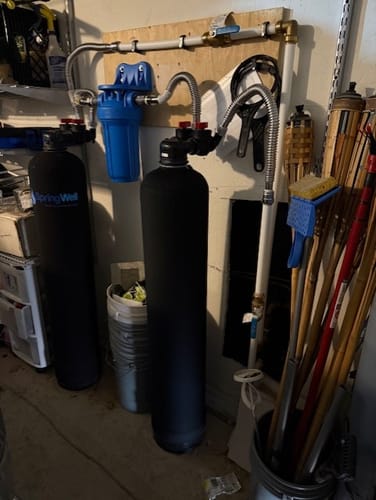
Once I committed to solving our hard water problem, I dove deep into research. The water treatment industry is surprisingly complex, with multiple technologies, countless brands, and a wide range of price points that left me initially overwhelmed.
My first step was understanding the best water softener system for city water different approaches to water softening. Traditional ion exchange systems use sodium chloride to replace calcium and magnesium ions - the classic "salt-based" method that's been proven effective for decades. Salt-free systems, technically called water conditioners, claim to neutralize minerals without removing them. Then there are magnetic and electronic water treatment devices with mixed reviews and questionable science behind them.
I quickly realized that for true hard water removal - not just conditioning - ion exchange was the gold standard.
But choosing an ion exchange system meant evaluating factors I'd never considered before: resin quality, regeneration efficiency, control valve reliability, and sizing calculations based on household water usage and hardness levels.
The sizing calculation was particularly crucial. Our household of three uses approximately 240 gallons per day, and with 12 grains per gallon hardness, I needed a system capable of removing 2,880 grains of hardness daily. Most residential softeners are rated for peak capacity, but real-world efficiency depends on regeneration frequency and resin quality.
I spent weeks comparing systems from major manufacturers, reading everything from NSF certification details to user forums where people shared long-term ownership experiences. What struck me was how many people wished they'd invested in a higher-quality system initially rather than replacing cheaper units after a few years.
The SoftPro ECO caught my attention because of its upflow regeneration design, which uses 75% less salt than traditional downflow systems. Living in an environmentally conscious state like Maine, the reduced environmental impact appealed to me. The system also featured demand-initiated regeneration - meaning it only regenerates when needed, not on a fixed schedule - which promised both efficiency and convenience.
SoftPro's certifications impressed me too. The system meets NSF/ANSI 44 standards for water softening performance and NSF/ANSI 372 for lead-free compliance. These aren't just marketing claims - they represent independent testing and verification of performance standards.
Decision Factors That Led to SoftPro ECO
After comparing over a dozen systems, several specific factors made the SoftPro ECO stand out from the competition. The first was the upflow regeneration technology, which seemed almost too good to be true until I understood the engineering behind it.
Traditional downflow regeneration forces brine solution through the resin bed in the same direction as service flow. This creates channeling and uneven regeneration, requiring excess salt to ensure complete resin restoration. SoftPro's upflow design reverses this process, allowing brine to contact the most exhausted resin first and creating more efficient ion exchange.
The numbers were compelling: 75% salt reduction compared to conventional systems, with regeneration cycles using only 2.5 pounds of salt versus 8-15 pounds for traditional units. For our usage pattern, this meant monthly salt costs of around $3 instead of $12-15.
The second major factor was the Vortech tank design. Instead of a traditional distribution system with internal piping that can clog or break, the Vortech tank uses a conical bottom that creates upflow using basic physics. Fewer moving parts meant fewer potential failure points - always a consideration when you're investing in equipment you expect to last 15-20 years.
Build quality was evident even in the specifications. The mineral tank features a one-piece construction rated for 150 PSI, well above typical residential water pressure. The control head uses a Fleck valve system - considered the industry standard for reliability - with a five-year warranty that demonstrates manufacturer confidence.
But what really sealed the decision was the comprehensive nature of the system.
Many competitors require separate pre-filtration, multiple tanks, or additional equipment for optimal performance. The SoftPro ECO includes integrated pre-filtration for sediment and chlorine, reducing complexity and maintenance requirements.
The final consideration was long-term support. SoftPro provides technical support directly from their facility, not through third-party call centers. Given the technical nature of water treatment systems, having access to knowledgeable support seemed crucial for long-term ownership success.
Installation Experience: Professional Setup Worth the Investment

Although SoftPro markets the ECO as "DIY-friendly," I chose professional installation after evaluating our specific plumbing configuration. Our main water line enters through the basement near our electrical panel, requiring integration with existing shutoff valves and installation of a bypass system for maintenance access.
The installation team arrived with the system pre-programmed for our water hardness level and household size. This attention to detail immediately impressed me - no guesswork or generic settings that might compromise performance.
The physical installation took approximately four hours, including time to properly flush and sanitize the system. The team installed a bypass valve assembly, allowing us to maintain water service during any future maintenance. They also added a separate line for our garden spigots, since softened water isn't ideal for watering plants due to the sodium content.
One challenge we encountered was positioning the system to allow adequate clearance for salt loading while maintaining access to our electrical panel. The installer's solution was elegant: mounting the control head slightly offset from the tank center, providing better access angles without compromising performance.
The startup process involved several automated rinse cycles to remove any manufacturing residues and properly condition the resin bed. During this process, the installer explained the control panel functions, regeneration timing, and maintenance requirements. The system automatically calculated optimal regeneration timing based on our programmed parameters.
Initial water testing revealed interesting baseline data. Our incoming hardness measured 11.8 grains per gallon (close to the municipal report), while post-softener water tested at 0.5 grains per gallon - well within the "soft" water range of 0-3 grains per gallon. Iron content dropped from 0.3 parts per million to undetectable levels, and chlorine odor was completely eliminated.
The installation team's professionalism and attention to detail gave me confidence that the system would perform as intended.
They provided written documentation of all settings, warranty information, and a maintenance schedule customized for our water conditions and usage patterns.
Performance Testing: Real Numbers from Six Months of Use
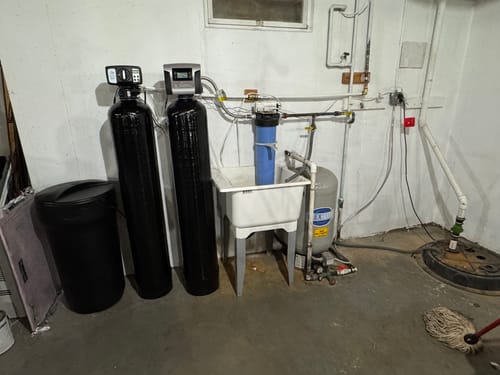
After six months of daily operation, I've collected extensive data on the SoftPro ECO's performance across multiple metrics. The results have exceeded my expectations in some areas while revealing a few operational realities I hadn't anticipated.
Water hardness reduction has been consistently excellent. Monthly testing shows post-softener hardness between 0.3 and 0.7 grains per gallon, regardless of seasonal variations in our municipal supply. During spring runoff periods, when incoming hardness spiked to 14.2 grains per gallon, the system maintained the same low output levels without any adjustment.
Salt efficiency has proven even better than advertised. The system uses approximately 2.2 pounds of salt per regeneration cycle, with cycles occurring every 8-10 days under normal usage. This translates to roughly 7 pounds of salt per month - 68% less than the previous owner's conventional softener according to our water treatment dealer.
Water pressure impact was a concern during my research phase, but testing revealed minimal reduction. Pre-softener pressure averages 52 PSI, while post-softener pressure measures 48-50 PSI. Even during peak usage periods - simultaneous shower, dishwasher, and washing machine operation - pressure remains adequate for comfortable use.
Regeneration timing has adapted intelligently to our usage patterns. The system learns when we typically use the most water and schedules regeneration during low-usage periods, usually between 2-4 AM.
The regeneration process takes approximately 90 minutes and uses about 25 gallons of water for the backwash and rinse cycles.
One unexpected benefit was chlorine removal effectiveness. Our city water contains 1.8-2.2 parts per million chlorine for disinfection, which created a noticeable taste and odor. The integrated carbon pre-filtration reduces chlorine to undetectable levels, significantly improving water taste for drinking and cooking.
Iron removal has been thorough and consistent. Our water contains low levels of dissolved iron (0.2-0.4 PPM) that occasionally caused slight discoloration in white clothing. Post-treatment iron levels test consistently below detection limits, eliminating staining issues completely.
The system's diagnostic capabilities provide valuable insights into performance trends.
The control display shows remaining capacity before regeneration, total gallons processed, and historical data on regeneration frequency. This information helps optimize settings and identify any performance changes over time.
Daily Life Impact: The Transformation We Didn't Expect
The most dramatic changes appeared in places I hadn't expected - starting with our morning coffee routine.
My wife is particular about her coffee, and within a week of installation, she commented that her usual blend tasted "cleaner" and "brighter." I initially attributed this to psychological bias, but side-by-side testing with bottled water confirmed the improvement. Removing minerals and chlorine allows the natural coffee flavors to emerge without interference.
Our dishwasher performance transformed completely. Glassware emerges spotless without rinse aid, and the white film that plagued our dishes disappeared entirely. More surprisingly, we're using about 30% less dishwasher detergent while achieving better results.
The same pattern emerged with laundry - reduced detergent usage with improved cleaning performance and noticeably softer fabrics.

Personal care benefits became apparent within days. My wife's skin felt less tight after showers, and she reduced her moisturizer usage significantly. I noticed my hair felt softer and more manageable, requiring less conditioner. These weren't dramatic, life-changing improvements, but the cumulative effect was definitely noticeable and appreciated.
Bathroom cleaning transformed from a weekly ordeal to a quick maintenance task. Soap scum formation dropped dramatically, and what little buildup occurs wipes away easily. Our shower doors, previously requiring aggressive scrubbing with specialty cleaners, now need only basic bathroom cleaner and minimal effort.
The kitchen faucet and sink maintain their appearance with simple daily wiping. Previously, mineral spots appeared within hours of cleaning, requiring constant attention to maintain a presentable appearance. Now, water spots are rare and rinse away easily when they do occur.
An unexpected benefit emerged in our appliance performance. Our water heater, previously requiring annual flushing to remove sediment, showed minimal buildup during its recent maintenance check. The technician commented that the internal components looked "remarkably clean" for a unit in regular service.
Plant care required some adjustment since softened water contains sodium that can harm certain plants. We installed a separate line for outdoor watering, but this was planned during installation and didn't create any ongoing inconvenience.
Guests have noticed the water quality improvement, particularly those sensitive to chlorine taste and odor. Several friends have asked about our system after commenting on how much better our water tastes compared to their homes.
Operating Costs and Long-Term Value Analysis
Six months of operation provides enough data to accurately project long-term ownership costs and evaluate the system's return on investment.
Monthly salt consumption averages 6.8 pounds, costing approximately $2.40 per month based on current salt prices. This is 70% lower than conventional softener salt usage, making the environmental and economic benefits tangible rather than theoretical.
Water consumption for regeneration averages 22-26 gallons per cycle, occurring every 8-10 days. At our local water rates, this adds roughly $0.75 per month to our utility bill.
Combined with minimal electricity usage for the control valve (estimated at $0.30 monthly), total operating costs are approximately $3.45 per month.
Maintenance requirements have been minimal but important. The pre-filter requires replacement every 6-8 months depending on chlorine levels and sediment content. Replacement filters cost $25-30, adding about $4 monthly to ownership costs when averaged over time.
Salt storage and handling is more convenient than expected. The system's efficiency means fewer trips to purchase salt, and the 40-pound bags I typically buy provide nearly two months of operation. The larger brine tank accommodates multiple bags, reducing the frequency of salt additions to every 6-8 weeks.
Calculating cost savings reveals impressive returns. Reduced soap and detergent usage saves approximately $15 monthly across laundry, dishwasher, and personal care products. Decreased cleaning supply usage adds another $8-10 in monthly savings as specialty lime and mineral removal products are no longer necessary.
Energy savings from improved water heater efficiency are harder to quantify precisely, but industry studies suggest 15-25% improvement in heating efficiency when scale buildup is prevented. For our household, this likely represents $12-18 in monthly savings on hot water heating costs.
Extended appliance life provides long-term value that's difficult to calculate precisely but represents significant savings over time. Our dishwasher, washing machine, and water heater should require fewer repairs and last longer without constant mineral exposure.
Total monthly savings of $35-45 against operating costs of $7-8 creates a net positive cash flow that helps justify the initial investment.
The system should pay for itself through operational savings within 3-4 years, while providing 15-20 years of service life according to manufacturer projections.
Honest Assessment: Limitations and Considerations
No water treatment system is perfect, and the SoftPro ECO has a few characteristics that potential buyers should understand before making a decision.
The regeneration process, while efficient, does create some temporary limitations. During the 90-minute cycle, water quality briefly fluctuates as the system backwashes and rinses. While water remains safe to drink, I avoid using large quantities during regeneration cycles.
The system's intelligent scheduling minimizes this impact, but occasionally regeneration coincides with unexpected high-usage periods.
Installation space requirements may challenge some homes. The system needs adequate clearance for salt loading and occasional maintenance access. Our basement provided sufficient space, but homes with cramped utility areas might require creative positioning or alternative location choices.
Salt handling, while reduced compared to conventional systems, still requires monthly attention. The 40-pound salt bags aren't particularly heavy, but they do require carrying and lifting into the brine tank.
For households with physical limitations, this could present ongoing challenges.
The initial investment is significant - substantially higher than basic water softeners available at home improvement stores. However, these budget systems typically lack the efficiency, durability, and performance features that justify the SoftPro's premium pricing. This is definitely a "buy once, cry once" purchase where quality comes at a cost.
Sodium addition to drinking water may concern individuals on sodium-restricted diets. While the amounts are relatively small (typically 8-12 milligrams per 8-ounce glass), people with specific health requirements should consult their physicians and consider reverse osmosis for drinking water if necessary.
System complexity, while generally beneficial, means more sophisticated components that require knowledgeable service if problems arise. Basic mechanical softeners are simpler to troubleshoot and repair, but they also lack the efficiency and convenience features that make the SoftPro attractive.
Seasonal performance variations are minimal but noticeable. During heavy spring runoff periods, when municipal water hardness increases, the system regenerates slightly more frequently. This doesn't affect output quality but does increase operating costs marginally during certain times of year.