
Hi, I'm Randy W.. I live in Wisconsin.
Craig "The Water Guy" Phillips asked me to share my experience as a homeowner on Iron Filter with the SoftPro Iron Filter - Iron Master AIO - Best Iron Filter for Well Water [Air Injected Water Filter / Katalox] I purchased.
This is how my adventures played out. I hope this helps you in your decision.
Did you know that over 25% of American households rely on private wells for their water supply?
If you're one of them, chances are you've dealt with the frustration of iron-contaminated water. I certainly have. For three years, my family and I battled the telltale signs: rusty stains on everything from our bathroom fixtures to our favorite white shirts, a metallic taste that made our morning coffee barely drinkable, and that embarrassing reddish tint in our ice cubes whenever we had guests over.
The breaking point came last fall when my wife opened the dishwasher to find our "clean" dishes covered in orange spots. We'd tried store-bought iron removal products, adjusted our washing machine settings, and even installed a basic sediment filter – nothing worked. That's when I started seriously researching iron filtration systems and discovered the Iron Master from SoftPro Water Systems.
After six months of daily use, I can honestly say this system has transformed our water quality and, frankly, our quality of life. But like any significant home investment, it's not without its considerations. In this detailed review, I'll walk you through my entire experience – from the initial research and installation process to the long-term performance and maintenance realities you need to know about.
The Iron Problem That Drove Me to Find a Solution
Before diving into the Iron Master itself, let me paint you a picture of what we were dealing with. Our well water tested at 4.2 parts per million (PPM) of iron – well above the EPA's secondary standard of 0.3 PPM for aesthetic concerns. While this level isn't considered a health hazard, the practical problems were driving us crazy.
Every morning, I'd turn on the bathroom faucet to brush my teeth, and after letting it run for even thirty seconds, I could see that telltale orange tint developing. Our white porcelain fixtures had developed permanent rust stains despite weekly cleaning with bleach-based products. The toilet bowl required almost daily scrubbing to prevent the unsightly ring that would form at the water line.
But the real frustration hit in the laundry room. My wife started separating not just by color and fabric type, but by how "iron-sensitive" items were. White shirts became yellowed after just a few washes, and anything light-colored developed those characteristic rust spots. We were using twice as much detergent and adding commercial iron fighters to every load, which was getting expensive fast.
The kitchen wasn't spared either. Our coffee maker required descaling every few weeks instead of every few months, and the internal components were developing a rusty buildup. Ice cubes came out with an orange tinge that was particularly noticeable in clear drinks. Even our dishwasher's interior was starting to show rust stains on the walls and door.
I tested our water using a home iron test kit and confirmed what I suspected: we were dealing with primarily ferrous iron (the dissolved, "clear water" type) that oxidizes when exposed to air. This explained why the water looked clear coming out of the tap but developed color after sitting or being agitated.
The financial impact was adding up too. Beyond the extra cleaning products and detergents, I was worried about the long-term damage to our appliances. Our water heater was only five years old, but I could already see rust-colored sediment when I drained it for maintenance. Replacing appliances prematurely because of iron damage wasn't something I wanted to face.
Research Journey: Why I Chose the Iron Master
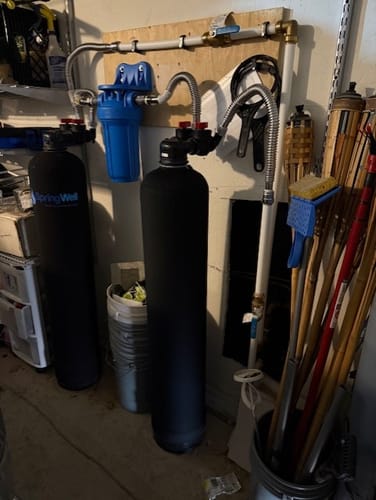
Once I committed to solving this problem properly, I spent about six weeks researching iron filtration technologies. I quickly learned that not all iron filters are created equal, and the right choice depends heavily on your specific water chemistry and iron levels.
I initially considered traditional water softeners since some can handle low levels of iron. However, multiple sources warned that iron can "poison" softener resin over time, reducing effectiveness and requiring more frequent regeneration. With our 4 PPM levels, this approach seemed like a temporary fix at best.
Greensand filters were another option I explored. These systems use manganese-treated sand to oxidize and filter iron, and they've been around for decades. However, the maintenance requirements seemed intensive – regular potassium permanganate treatments and frequent backwashing. Plus, several online reviews mentioned ongoing issues with the permanganate solution being harsh and potentially problematic if not handled correctly.
What caught my attention about air injection systems like the Iron Master was their chemical-free approach.
Instead of adding chemicals to treat the iron, these systems use compressed air to oxidize ferrous iron into ferric iron, which then gets trapped in a specialized filter media. This seemed more appealing from both a maintenance and environmental standpoint.
The Iron Master specifically uses Katalox Light media, which I learned is a relatively newer technology compared to traditional greensand. Katalox Light is a catalytic filtration media that can handle higher iron concentrations and has a longer lifespan than conventional filter media. The manufacturer claims it can effectively remove iron, manganese, and hydrogen sulfide without the need for chemical regeneration.
What ultimately sold me on the Iron Master was the combination of factors: NSF certification for iron removal, a ten-year warranty on the control valve, and most importantly, the air injection technology that eliminates the need for chemical treatments. The system is also designed to be fully automatic – it determines when backwashing is needed based on water usage rather than just a time schedule.
I also appreciated that SoftPro offered different tank sizes based on household size and water usage. For our family of four with typical usage patterns, they recommended the 10" x 54" tank size, which provides adequate contact time for proper oxidation while maintaining good flow rates throughout the house.
Unboxing and First Impressions
The Iron Master arrived in early October via freight delivery, which I had expected given the size and weight of the components. The shipping was actually faster than promised – ordered on a Tuesday and delivered the following Monday, well-packed on a wooden pallet.
Opening everything up, I was immediately impressed by the build quality. The fiberglass tank has a professional, commercial-grade appearance with a smooth finish and solid feel. At 54 inches tall, it's definitely a substantial piece of equipment, but the 10-inch diameter means it doesn't take up as much floor space as I had anticipated.
The control head is where you can really see the quality difference compared to cheaper systems I had looked at. It's a Fleck 2510SXT valve, which I had read about during my research as being one of the more reliable options in the industry. The LCD display is clear and bright, and all the connections appear to be high-quality brass fittings rather than plastic.
Inside the tank, the Katalox Light media looks almost like small, dark pebbles – completely different from the sand-like appearance I was expecting. SoftPro includes about 2.5 cubic feet of this media, which they explained provides the right balance between filtration capacity and backwash efficiency.
The air injection pump is a separate component that mounts near the tank. It's surprisingly quiet during operation and appears to be well-constructed with a metal housing rather than plastic. The pump automatically adds air to the system before each service cycle, which is what enables the chemical-free iron oxidation process.
Documentation was thorough and well-organized. The installation manual includes clear diagrams for different plumbing configurations, and the programming guide walks you through setting up the control valve for your specific water conditions. They even include a laminated quick-reference card for the most common programming functions.
Installation Experience: Easier Than Expected

I'll be honest – I was intimidated by the prospect of installing this system myself. I'm reasonably handy, but plumbing isn't my strongest skill, and the thought of cutting into my main water line made me nervous. However, after getting quotes from three local plumbers that ranged from $400 to $650 for installation, I decided to tackle it myself with my neighbor's help.
The location was my first consideration. The Iron Master needed to be installed on the main water line after the pressure tank but before any branches to fixtures or appliances. I chose a spot in our basement near the existing pressure tank where I had adequate space for the unit and room to work around it for future maintenance.
The installation process took us about five hours total, spread over a Saturday afternoon.
This included time for multiple trips to the hardware store for additional fittings and a few "let's make sure we're doing this right" consultation breaks with the manual.
We started by shutting off power to the well pump and draining the pressure tank. Cutting into the main line was actually less stressful than I anticipated – we used a pipe cutter for clean cuts and had minimal water spillage thanks to proper drainage beforehand.
The bypass valve installation was straightforward with the included components. SoftPro provides a complete bypass assembly with ball valves, which allows you to route water around the system for maintenance or in case of any issues. Having this option provides great peace of mind.
Connecting the drain line required running a 1/2-inch line to our floor drain about eight feet away. This was probably the most time-consuming part of the installation, as we wanted to secure the line properly and ensure it had adequate slope for proper drainage during backwash cycles.
The electrical connection was simpler than expected. The system plugs into a standard 110V outlet, and the air pump has its own separate power cord. I installed a dedicated outlet near the unit to avoid using extension cords, which required running about six feet of new electrical line.
Programming the control valve took about thirty minutes, following the step-by-step instructions in the manual. You input your water hardness level, iron content (from your water test), and household size to determine optimal regeneration frequency. The system calculates backwash timing based on these parameters and your actual water usage.
Initial startup was exciting and nerve-wracking at the same time. After slowly opening the inlet valve and checking for leaks, we initiated the first backwash cycle to properly settle the media and remove any shipping dust. The process takes about 20 minutes and uses approximately 150 gallons of water – something to keep in mind if you're on a well with lower recovery rates.
Performance Testing and Real-World Results
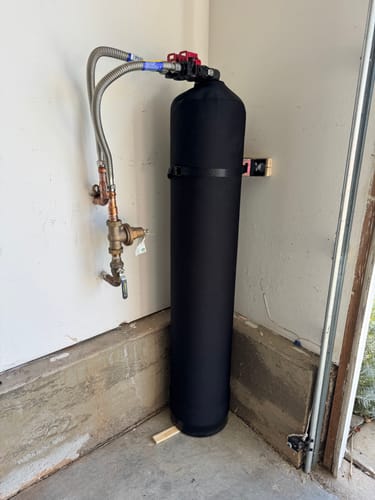
The proof of any water treatment system is in the results, and I'm happy to report that the Iron Master has exceeded my expectations in almost every measurable way. I started documenting performance from day one using the same home test kit I had used to identify our iron problem initially.
Baseline water coming into the system: 4.2 PPM iron, 7.8 pH, 280 PPM total dissolved solids
Results after first week: 0.1 PPM iron, 7.6 pH, 275 PPM total dissolved solids
The iron reduction was dramatic and immediate. Within 24 hours of installation, we could see a noticeable difference in water clarity. The slight orange tint that had become our "normal" was completely gone, and water remained crystal clear even after sitting in a glass for several minutes.
More importantly, the practical improvements became apparent within days. Our morning routine changed completely – no more waiting for the water to "clear up" before brushing teeth or washing faces. The metallic taste that had plagued our drinking water disappeared entirely. Coffee and tea tasted noticeably better, with more subtle flavors coming through that had been masked by the iron taste.
In the laundry room, the transformation was remarkable. Within two weeks, we noticed that white clothes were staying white, and light-colored items weren't developing those characteristic rust spots. We were able to reduce our detergent usage back to normal levels and eliminate the iron fighter additives we had been using in every load.
The kitchen showed improvements too. Our dishwasher started producing truly spot-free dishes without the orange staining we had grown accustomed to. Ice cubes came out crystal clear, which was particularly noticeable when entertaining guests. Even our coffee maker required less frequent descaling and cleaning.
Bathroom fixtures began showing gradual improvement as existing stains were no longer being reinforced by new iron deposits.
While the Iron Master doesn't remove existing stains (that requires manual cleaning), preventing new ones from forming made maintenance much easier.
I conducted more detailed testing after one month using a more comprehensive water analysis kit. The results showed consistent iron removal performance, with levels staying well below 0.3 PPM. pH remained stable, and there was no significant impact on other water quality parameters.
Flow rate was another important consideration, especially since we have a large house with multiple bathrooms. I measured flow at various fixtures before and after installation and found minimal impact. The main floor bathroom faucet, for example, delivered 2.8 GPM before installation and 2.6 GPM afterward – barely noticeable in practical use.
During peak usage times (morning showers, dishwasher running, etc.), the system maintained good pressure throughout the house. The tank size and media bed depth provide adequate contact time even during high-demand periods.
Daily Living Impact: The Real-World Difference
Six months in, the Iron Master has become one of those "invisible" home improvements that you don't think about daily but appreciate constantly. The most obvious change is how our cleaning routine has simplified throughout the house.
In the bathrooms, weekly cleaning now actually keeps fixtures looking good instead of just slowing down the inevitable staining process.
My wife remarked that she no longer dreads cleaning the guest bathroom before company arrives – there's no scrambling to scrub away embarrassing iron stains that seemed to appear overnight.
Our laundry routine has returned to normal for the first time in years. We can wash whites with confidence, and delicate items no longer require special pre-treatment or iron-specific additives. The financial savings here are real – we're using about 30% less detergent and have eliminated the monthly purchase of iron removal products that were costing us roughly $25 monthly.
The kitchen improvements extend beyond just taste and appearance. Our coffee maker, which had required descaling every 3-4 weeks, now goes 2-3 months between treatments. The automatic ice maker produces consistently clear ice, and we've started actually using the refrigerator's water dispenser again instead of buying bottled water for drinking.
Perhaps most surprisingly, our water heater seems to be running more efficiently. While I can't prove a direct connection, our monthly electric bill has dropped slightly since installation. I suspect this is because the heating elements aren't fighting against iron buildup that was reducing heat transfer efficiency.
Guests have noticed the difference too, though they usually can't pinpoint exactly what changed. Several people have commented on how good our coffee tastes or asked if we switched to a different water source. It's satisfying to be able to explain that we're using the same well water, just properly treated now.
The system operates so quietly that we rarely notice it cycling.
The backwash process occurs automatically about every four days based on our usage patterns, typically during overnight hours when water demand is low. Occasionally, I'll hear the gentle hum of the air pump or the sound of water flowing through the drain line, but it's much quieter than our existing pressure tank system.
From a maintenance perspective, the system has been essentially hands-off so far. I check the digital display monthly to monitor cycle counts and confirm everything is operating normally, but there's been no need for adjustments or interventions. The automatic operation really does work as advertised.
Operating Costs and Long-Term Economics
One of the most important considerations for any water treatment system is the ongoing operational cost, and I've been tracking this carefully since installation. The Iron Master's chemical-free operation means lower ongoing expenses compared to systems that require regular chemical additions.
Electricity usage is minimal but measurable.
The control valve and air pump together draw about 15 watts during operation and minimal standby power. Based on my calculations and our local electric rates, this adds approximately $8-12 monthly to our electric bill – much less than I had budgeted.
Water usage for backwashing is more significant, particularly for well users. Each cycle uses about 150 gallons over 20 minutes, which happens every 3-4 days in our household. This translates to roughly 1,500 gallons monthly for regeneration – something to consider if you have a low-producing well or pay for water by volume.
The major long-term cost will be media replacement. SoftPro estimates the Katalox Light media should last 8-10 years under normal residential conditions, depending on iron levels and water usage. Replacement media costs approximately $300-400, making the annual media cost around $40-50.
Comparing this to our previous situation reveals substantial savings.
Before the Iron Master, we were spending about $25 monthly on iron removal additives for laundry, plus increased detergent usage and more frequent appliance maintenance. The annual cost of these band-aid solutions was approaching $400, not counting the value of our time spent on extra cleaning and maintenance.
There are also harder-to-quantify savings from appliance protection. Our water heater, dishwasher, coffee maker, and washing machine should all have longer service lives without constant iron exposure. Even if this extends appliance life by just 20-30%, the savings over 10-15 years become significant.
The system itself carries a 10-year warranty on the control valve and 5 years on the tank, which provides good protection for the major components. SoftPro has been responsive to the few technical questions I've had, and their customer service seems genuinely knowledgeable about their products.
Honest Assessment: Limitations and Considerations
While I'm genuinely satisfied with the Iron Master's performance, it's important to discuss some limitations and considerations that potential buyers should understand.
Space requirements are significant.
The 54-inch tall tank plus plumbing connections require adequate ceiling height and floor space. In our basement, this wasn't an issue, but homeowners with limited mechanical room space might find placement challenging. The system also needs to be accessible for future maintenance, so cramped installations aren't ideal.
Installation complexity, while manageable for DIY homeowners, shouldn't be underestimated. You're working with the main water line, electrical connections, and drain systems. If you're not comfortable with basic plumbing and electrical work, professional installation adds $400-650 to the total cost.
The system is designed specifically for iron, manganese, and hydrogen sulfide removal. If your water has other issues – high hardness, bacteria, or other contaminants – you'll need additional treatment components. In our case, we still use a basic water softener downstream from the Iron Master to address our moderate hardness levels.
Backwash water usage can be a consideration for well users with limited recovery rates.
At 150 gallons per cycle every few days, homes with wells producing less than 3-5 gallons per minute might need to iron well water filter time backwash cycles carefully or consider a smaller tank size.
The system requires consistent power to operate. During power outages, you'll still have water (assuming your well pump has backup power), but the iron filtration won't be active. This hasn't been a practical problem for us, but it's worth noting for areas with frequent outages.
Seasonal variations in well water chemistry can affect performance. I've noticed slight differences in regeneration frequency between summer and winter, likely due to changes in our water table and usage patterns. The system adjusts automatically, but it's something to be aware of.
Finally, while the chemical-free operation is a major advantage, it does mean you can't "boost" the system's performance for particularly challenging water conditions like you might with chemical-based systems.
The iron removal capacity is largely determined by the media volume and contact time.