
Hi, I'm Jake B.. I live in Colorado.
Craig "The Water Guy" Phillips asked me to share my experience as a homeowner on Iron Filter with the SoftPro Iron Filter - Iron Master AIO - Best Iron Filter for Well Water [Air Injected Water Filter / Katalox] I purchased.
This is how my adventures played out. I hope this helps you in your decision.
Did you know that iron contamination affects over 25% of private wells across the United States?
I discovered this sobering statistic after months of battling the telltale signs of iron-laden well water in my Colorado home. Orange stains creeping across my bathroom fixtures, that metallic taste in my morning coffee, and the embarrassing rust-colored water that occasionally flowed from my taps had become daily reminders of a problem I could no longer ignore.
After eight months of living with the SoftPro Iron Master AIO system, I can confidently say it has completely transformed my water quality experience. This comprehensive review details my journey from frustrating iron problems to crystal-clear water, including the real-world performance data, installation challenges, ongoing costs, and honest limitations I've discovered through extended use.
The Iron Problem That Drove Me to Find a Solution
Living in Colorado with a private well system, I initially dismissed the occasional orange-tinted water as a minor inconvenience. However, what started as subtle discoloration quickly escalated into a comprehensive household problem that affected everything from our drinking water to our appliances.
The first major wake-up call came when I noticed persistent rust stains developing in our white porcelain bathroom sink. Despite regular cleaning with various commercial products, these orange streaks seemed to reappear within days. The iron concentration in our well water tested at 4.2 parts per million (PPM) - well above the EPA's secondary standard of 0.3 PPM for aesthetic considerations.
Beyond the visual problems, the iron contamination created a cascade of issues throughout our home. Our dishwasher began leaving orange spots on glassware, and our white laundry developed a dingy, rust-colored tinge that no amount of bleach could eliminate. The metallic taste became so pronounced that we switched to bottled water for drinking and cooking, adding an unexpected $80 monthly expense to our grocery budget.
Perhaps most concerning was the impact on our appliances. Our water heater developed sediment buildup at an alarming rate, requiring professional flushing every six months instead of the typical annual maintenance. The iron particles also clogged our aerators and showerheads, reducing water pressure and creating uneven spray patterns.
I initially attempted to address the problem with a basic sediment filter, thinking the iron was simply particulate matter. This $150 investment proved completely ineffective because our iron existed primarily in dissolved ferrous form - invisible to standard filtration until it oxidized upon contact with air and became the visible ferric iron causing our stains.
After consulting with a local water treatment specialist, I learned that our specific iron problem required oxidation followed by filtration - a two-step process that most basic filters simply cannot handle. The specialist tested our water and confirmed not only the 4.2 PPM iron content but also detected trace amounts of hydrogen sulfide, which explained the occasional "rotten egg" odor we'd noticed.
Research Phase: Understanding Iron Filtration Technologies
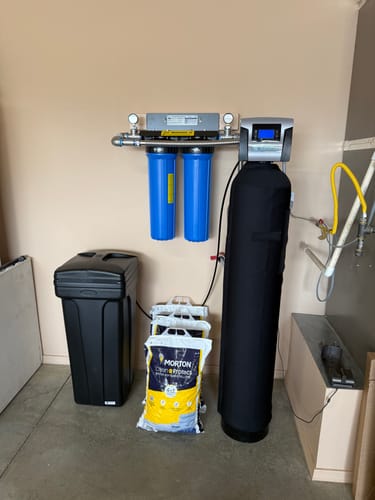
Once I understood that our iron problem required specialized treatment, I dove into researching the various technologies available. The learning curve was steeper than expected, but understanding the science behind iron removal proved crucial for making an informed decision.
Iron exists in well water in two primary forms: ferrous (dissolved) and ferric (oxidized). Most iron filters work by converting dissolved ferrous iron into ferric iron particles that can then be trapped by filtration media. The main technologies I encountered included traditional air injection systems, chemical oxidation methods, and catalytic media approaches.
Air injection systems introduce oxygen into the water stream, causing ferrous iron to oxidize into filterable ferric particles. These systems typically include an air pocket at the top of the filter tank that gets recharged during the backwash cycle. While effective, they require precise air-to-water ratios and can struggle with higher iron concentrations or complex water chemistry.
Chemical oxidation systems use chlorine, hydrogen peroxide, or potassium permanganate to convert ferrous iron. While highly effective, these systems require ongoing chemical purchases, precise dosing equipment, and careful monitoring to prevent over-treatment or chemical taste issues.
Catalytic media systems, like the Katalox used in the Iron Master, work differently. The Katalox media acts as both an oxidizing agent and a filter medium, converting ferrous iron through catalytic action rather than simple air injection. This approach can handle higher iron concentrations and often provides more consistent performance across varying water conditions.
During my research, I also discovered the importance of backwash frequency and water waste considerations. Iron filters require regular backwashing to remove accumulated iron particles and regenerate the filtration media. Systems that backwash too frequently waste water and increase operating costs, while insufficient backwashing leads to media fouling and reduced performance.
The Iron Master's design caught my attention because it combines catalytic oxidation with automated backwash controls based on actual usage rather than simple time intervals. The system monitors water flow and adjusts backwash frequency accordingly, potentially reducing water waste while maintaining optimal performance.
Another critical factor was sizing calculations. Iron filters must be properly sized for both iron concentration and household flow rates. Undersized systems become overwhelmed during peak demand periods, allowing iron breakthrough. Oversized systems waste water during backwashing and may not achieve optimal contact time for effective iron conversion.
Why I Chose the SoftPro Iron Master AIO System
After weeks of research and consultations with three different water treatment dealers, the SoftPro Iron Master AIO distinguished itself through several key advantages that aligned with our specific needs and constraints.
The Katalox media technology was the primary deciding factor. Unlike traditional air injection systems that rely on maintaining precise air pockets, the Katalox acts as a catalytic oxidizing medium that doesn't require external chemical addition or complex air injection mechanisms. This simplified approach appealed to me because it meant fewer potential failure points and less ongoing maintenance complexity.
The system's capacity specifications matched our household requirements perfectly. With a 1.5 cubic foot Katalox bed, the Iron Master can handle up to 15 GPM flow rates while effectively treating iron concentrations up to 15 PPM - well above our 4.2 PPM level. This oversized capacity provided confidence that the system wouldn't become overwhelmed during peak usage periods like simultaneous showers and dishwasher operation.
The automated backwash controller was another compelling feature. Rather than backwashing on arbitrary time schedules, the system tracks actual water usage and initiates backwash cycles based on gallons processed. This intelligent approach meant more efficient water usage and better system performance compared to simple timer-based controls.
Physical compatibility was also crucial. Our utility room had limited space, and the Iron Master's single-tank design fit within our available area while still allowing adequate clearance for service access. The system measures 48 inches tall with a 13-inch diameter, requiring approximately 18 square feet of floor space including service clearances.
The NSF/ANSI Standard 61 certification for drinking water system components provided quality assurance that some alternative products lacked. This certification means the materials used in construction have been tested for potential health effects when in contact with drinking water.
Warranty coverage was comprehensive compared to competitors. The five-year warranty on the control valve and tank, plus the manufacturer's commitment to technical support, indicated confidence in the product's longevity and performance.
Cost analysis also favored the Iron Master. While the initial investment of $1,847 was substantial, the total cost of ownership compared favorably to chemical injection systems that require ongoing chemical purchases and more complex maintenance procedures.
Unboxing and Initial Impressions

The Iron Master arrived via freight delivery in professional packaging that immediately conveyed quality and attention to detail. The system shipped in two separate boxes - the main filter tank assembly and a secondary package containing the control valve, installation hardware, and documentation.
Upon opening the main package, I was impressed by the build quality of the fiberglass tank. The tank construction felt substantial and durable, with smooth interior walls and professional-grade fittings. The blue tank color was more vibrant than expected from online photos, and the overall finish appeared resistant to scratches and UV exposure.
The control valve assembly arrived separately and required mounting to the tank during installation. The Fleck 5600SXT control valve felt solid and well-machined, with clear labeling on all connections and controls. The digital display was bright and easy to read, even in our dimly lit utility room.
All installation hardware was included in the package: inlet and outlet fittings, bypass valve assembly, drain line adapter, and even the required pipe thread sealant. The inclusion of every necessary component was refreshing after previous experiences with incomplete installation kits from other manufacturers.
The installation manual was comprehensive and well-illustrated, though I ultimately decided to hire a professional installer due to the complexity of integrating the system into our existing plumbing. The manual provided clear diagrams for both professional and DIY installations, including specific requirements for drain line sizing and electrical connections.
One pleasant surprise was the inclusion of pre-filtration recommendations and water testing guidelines. The documentation explained how different water chemistry factors could affect system performance and provided troubleshooting guidance for common installation issues.
The Katalox media arrived pre-loaded in the tank, eliminating the messy process of media loading that some systems require. This attention to detail reduced installation time and eliminated the risk of improper media bed preparation.
Installation Experience and Setup Process
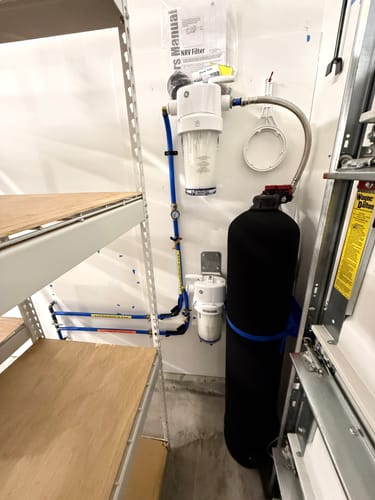
While the Iron Master's documentation suggested possible DIY installation, I chose to hire a certified water treatment installer after assessing the complexity of integrating the system into our existing plumbing configuration. This decision proved wise, as several unexpected challenges arose during the installation process.
The installation required three main connections: incoming water supply, treated water output, and drain line for backwash discharge. Our utility room's layout necessitated relocating the main water shutoff and installing additional isolation valves to accommodate the bypass system properly.
The most challenging aspect involved the drain line installation. The Iron Master's backwash cycle discharges approximately 85 gallons of rinse water, requiring a drain line capable of handling this flow without creating back-pressure. Our existing floor drain was undersized, necessitating the installation of a dedicated 1.5-inch drain line connecting directly to our septic system.
Electrical requirements were straightforward - the system operates on standard 115V household current with minimal power consumption. The installer connected the system to a dedicated GFCI outlet positioned near the tank location for safety and code compliance.
Initial system programming required setting our water hardness level, iron concentration, and household size parameters. The Fleck control valve's programming interface was intuitive, though the installer's expertise ensured optimal settings for our specific water conditions and usage patterns.
The first backwash cycle was initiated manually during installation to verify proper system operation and drain line function. This initial cycle lasted approximately 12 minutes and successfully purged any residual manufacturing oils or loose media particles from the system.
After installation completion, we waited 24 hours before using the treated water to allow the Katalox media to fully condition and any residual installation disturbances to settle. The installer provided a comprehensive system operation overview, including manual backwash procedures and basic troubleshooting guidance.
Total installation time was approximately 4.5 hours, including the additional plumbing modifications required by our specific layout. Professional installation cost $485, which included all additional fittings and drain line work required for proper system integration.
Performance Results and Water Quality Transformation
The Iron Master's performance exceeded my expectations, delivering dramatic improvements in water quality that became apparent within the first week of operation. The transformation was so significant that family members and visitors immediately noticed the difference in taste, clarity, and overall water quality.
Iron concentration testing revealed impressive results. Pre-treatment levels of 4.2 PPM iron consistently dropped to less than 0.1 PPM post-filtration - a 97% reduction that far exceeded the EPA's aesthetic guidelines. This dramatic improvement eliminated all visible signs of iron contamination, including the orange staining, metallic taste, and occasional rust-colored water incidents.
The most noticeable immediate improvement was the elimination of metallic taste in our drinking water and coffee. Within three days of system activation, the characteristic iron taste completely disappeared, allowing us to return to using tap water for drinking and cooking. This change alone saved approximately $80 monthly in bottled water expenses.
Bathroom and kitchen fixtures showed remarkable improvement in stain resistance. The persistent orange streaks that had plagued our white porcelain sink disappeared completely, and new staining stopped occurring despite identical cleaning routines. Our dishwasher began producing spot-free glassware, and the dingy appearance of our white laundry gradually improved with each washing cycle.
Appliance performance benefits became evident over the following months. Our water heater's efficiency improved noticeably, and the frequency of required maintenance decreased substantially. Aerators and showerheads that had required monthly cleaning to maintain proper flow now operate for months without maintenance.
The system's consistent performance impressed me during peak demand periods. Even with simultaneous shower use, dishwasher operation, Click here to find out more and laundry cycles, the Iron Master maintained effective iron removal without any breakthrough incidents. The 15 GPM flow rate capacity proved more than adequate for our household's maximum demand scenarios.
Backwash frequency settled into a predictable pattern based on our actual water usage. The system typically backwashes every 8-10 days, consuming approximately 85 gallons of water per cycle. This frequency aligned with the manufacturer's predictions based on our iron levels and household size.
One unexpected benefit was the improvement in our home's overall water clarity. The Katalox media's filtration action removed not only iron but also trace sediment and turbidity that we hadn't realized was present. The treated water consistently appears crystal clear, even during periods of increased well turbidity following heavy rainfall.
Real-World Operating Costs and Maintenance Requirements
After eight months of operation, I've developed a clear understanding of the Iron Master's ongoing costs and maintenance requirements. The system has proven remarkably efficient and low-maintenance compared to my initial expectations and research into alternative technologies.
The most significant ongoing cost is water consumption during backwash cycles. Each cycle uses approximately 85 gallons, and with backwashing occurring every 8-10 days, monthly water consumption averages 255 gallons. At our local water rates, this translates to roughly $12 monthly in additional water costs.
Electrical consumption is minimal. The control valve operates intermittently and the system includes no pumps or continuous-operation components. Monthly electrical costs average less than $3, making the total utility impact approximately $15 monthly.
Maintenance requirements have been refreshingly simple. The system requires no routine chemical additions, filter cartridge replacements, or complex adjustments. Monthly visual inspections of the control valve display and periodic testing of treated water iron levels constitute the primary maintenance activities.
The Katalox media is rated for 7-10 years of service life under normal operating conditions. At our iron concentration levels and backwash frequency, I anticipate media replacement around the 8-year mark at an estimated cost of $450 including professional service.
Professional annual service inspections aren't required but are recommended. A qualified technician can verify control valve programming, test system performance, and identify any developing issues before they affect water quality. Annual service calls typically cost $125-$150 in our area.
Unexpected maintenance has been virtually nonexistent. The system has operated continuously without any service calls, component replacements, or performance issues. The robust design and quality components have proven reliable through varying seasonal water conditions and usage patterns.
Comparing total operating costs to our previous bottled water expenses and increased appliance maintenance, the Iron Master has generated net savings of approximately $45 monthly. The system's efficiency and reliability have eliminated the hidden costs associated with iron-related appliance damage and cleaning product consumption.
Water testing every three months helps monitor system performance and verify continued iron removal effectiveness. Home test kits cost approximately $15 each, adding $60 annually to monitoring expenses. These tests consistently show iron levels below 0.1 PPM, confirming maintained system performance.
Honest Assessment: Limitations and Areas for Improvement
While my overall experience with the Iron Master has been overwhelmingly positive, honest evaluation reveals several limitations and areas where the system could potentially be improved. Understanding these aspects provides realistic expectations for prospective buyers.
The physical size requirements may challenge some installations. The 48-inch height and 13-inch diameter, while reasonable for the system's capacity, require adequate ceiling clearance that some utility rooms or basements may lack. The weight of approximately 180 pounds when filled necessitates solid floor support in elevated installations.
Backwash water consumption, while efficient for iron removal, may concern households with limited water availability or expensive water costs. The 85 gallons consumed every 8-10 days represents meaningful water usage that must be factored into total operating costs and environmental considerations.
The system provides no indication of media condition or remaining service life beyond performance monitoring. Unlike systems with replaceable cartridges that provide visual wear indicators, determining optimal Katalox replacement timing requires water testing and performance observation rather than clear visual cues.
Initial water waste during startup and after extended periods of non-use can be substantial. The system requires purging several minutes of water to achieve optimal iron removal after sitting idle, which may concern conservation-minded users or those with limited water supplies.
The control valve's programming interface, while functional, feels somewhat dated compared to modern smart home integration capabilities. The system lacks remote monitoring options, smartphone connectivity, or advanced diagnostic features that newer systems increasingly offer.
Complex water chemistry situations may challenge the system's effectiveness. While our iron-dominant contamination responded excellently, water containing high levels of manganese, hydrogen sulfide, or other contaminants might require additional treatment stages not provided by the standalone Iron Master.
Professional installation, while not absolutely required, proved necessary in our situation due to plumbing complexity. DIY installation capabilities may be limited for homeowners without plumbing experience, adding professional installation costs to the total investment.
The system's performance during power outages leaves untreated water available through the bypass valve, but no backup power options exist for maintaining treatment during extended outages. Households requiring continuous iron removal during power interruptions would need additional backup solutions.