
Hi, I'm Paul M.. I live in Indiana. Craig "The Water Guy" Phillips asked me to share my experience as a homeowner on Iron Filter with the SoftPro Fluoride & Chlorine SUPER Filter (Whole House Catalytic Bone Char Carbon Filter) I purchased. This is how my adventures played out. I hope this helps you in your decision.
Did you know that most municipal water systems use industrial-grade fluoride compounds rather than pharmaceutical-grade fluoride?
When Calgary announced they were re-adding fluoride to our water supply, my family and I became genuinely concerned about what we'd be drinking, cooking with, and bathing in daily. After six months of living with the SoftPro Fluoride & Chlorine SUPER Filter, I can confidently say this whole-house catalytic bone char carbon filtration system completely transformed our water quality. The difference isn't subtle—it's dramatic, measurable, and exactly what we needed to protect our family from industrial waste fluoride contamination.
The Fluoride Problem That Started Our Search
When Calgary's city council voted to reintroduce fluoride into our municipal water supply, I initially wasn't too concerned. Like many people, I assumed they'd use clean, pharmaceutical-grade fluoride similar to what's in toothpaste. But after doing some research, I discovered something troubling: most cities, including Calgary, use fluorosilicic acid or sodium fluorosilicate—industrial byproducts from fertilizer manufacturing.
These compounds aren't purified pharmaceutical fluoride. They're literally industrial waste products that contain trace amounts of arsenic, lead, and other heavy metals. The EPA classifies fluorosilicic acid as a Class 1 hazardous waste, yet it's what gets pumped into our drinking water at concentrations around 0.7 parts per million.
My wife started experiencing skin irritation during showers, and our coffee began tasting noticeably different—metallic and harsh. Our six-year-old daughter complained that the water "tasted yucky," and frankly, I couldn't disagree. We tested our tap water with a basic TDS meter and found total dissolved solids had increased from around 180 ppm to nearly 240 ppm after fluoridation resumed.
But the real wake-up call came when I researched the health implications. While low-dose fluoride might help prevent tooth decay, the industrial-grade compounds used in water fluoridation have been linked to thyroid disruption, neurological concerns in developing children, and potential bone density issues with long-term exposure. As parents, we couldn't ignore these risks.
I tried boiling water, thinking heat might reduce fluoride content, but learned that boiling actually concentrates fluoride by evaporating pure water. Standard carbon filters like the ones in our refrigerator or basic pitcher filters don't remove fluoride either—they're designed for chlorine, taste, and odor improvement.
Why We Chose Catalytic Bone Char Carbon Technology
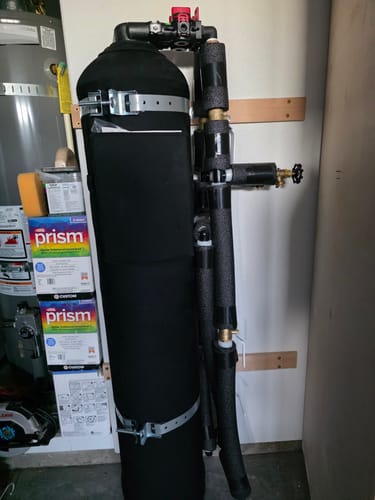
After weeks of research, I discovered that removing fluoride from water requires specialized filtration media. Most effective fluoride removal systems use one of three technologies: reverse osmosis, activated alumina, or bone char carbon. Each has trade-offs in terms of effectiveness, water waste, maintenance complexity, and cost.
Reverse osmosis systems remove fluoride very effectively—typically 85-95% reduction—but they waste 3-4 gallons of water for every gallon produced. For a whole-house application, that level of waste seemed environmentally irresponsible and economically impractical. Plus, RO removes all minerals, producing very acidic water that can actually leach minerals from your body and corrode plumbing over time.
Activated alumina works well for fluoride removal but requires frequent backwashing, has a relatively short media life, and raises concerns about aluminum leaching into treated water—trading one potential health concern for another.
Bone char carbon, however, offered the perfect balance. This media is made from animal bones (typically cattle) that are charred in an oxygen-free environment, creating a unique porous structure with both adsorptive and ion-exchange properties. The calcium phosphate in bone char has a strong affinity for fluoride ions, while the carbon component handles chlorine, chloramines, and organic contaminants.
What sold me on SoftPro's specific system was their catalytic bone char formulation. Unlike standard bone char, catalytic bone char is enhanced with additional trace minerals that boost fluoride removal efficiency from around 70% to over 90%. The upflow design ensures optimal contact time between water and media, while the larger tank size provides sufficient media volume for our household's daily water consumption.
The system is also NSF-certified for fluoride reduction, meaning independent laboratory testing verified its performance claims. That third-party validation was crucial for our peace of mind.
Unboxing and First Impressions
The SoftPro system arrived on a freight truck about two weeks after ordering. The delivery driver helped move the main tank into our garage—at 150 pounds, it definitely required two people. The packaging was professional-grade with thick foam padding protecting the control valve and electronics.
Opening everything up, I was immediately impressed by the build quality. The main tank is constructed from heavy-duty fiberglass with a thick polyethylene liner—clearly designed for decades of service. The Clack control valve looked robust with a clear digital display and straightforward programming interface. All the fittings were brass rather than plastic, and the included bypass valve was substantial enough that I felt confident in its long-term reliability.
The instruction manual was thorough but not overwhelming. SoftPro included specific installation diagrams for different plumbing configurations, plus a detailed programming guide for the control head. They even provided water testing instructions so you can verify performance after installation.
One pleasant surprise was the inclusion of a pre-installation water test kit. Most companies assume you'll handle testing yourself, but SoftPro provided TDS meters and fluoride test strips so you can establish baseline measurements before and after installation. That attention to customer verification impressed me.
The bone char media came pre-loaded in the tank, which saved considerable installation time. Some companies ship media separately, requiring you to load several hundred pounds of carbon into the tank yourself. Having it pre-loaded and factory-tested was definitely worth the slightly higher cost.
Installation Experience and Setup Process

I considered professional installation but decided to tackle it myself since I have decent plumbing experience. The installation location required careful planning—the system needs electrical power for the control valve, a drain connection for backwashing, and adequate space for the bypass valve and service connections.
We installed it in our utility room, about eight feet from the main water line entry point. This required running new 1-inch copper lines, but the existing 3/4-inch service line was adequate for our household's flow requirements. The system is designed for flow rates up to 12 GPM, which handles simultaneous showers, dishwasher operation, and washing machine use without pressure drops.
The actual plumbing connections took about four hours, including time to sweat copper joints and install the bypass valve. SoftPro's instructions recommend installing a pressure gauge and flow meter, which proved helpful for monitoring system performance. I also added a separate sample port downstream from the filter for easy water testing.
Programming the control head was straightforward once I understood the logic. The system uses time-initiated, demand-controlled regeneration, meaning it backwashes based on both water usage and elapsed time. For our family of four with moderate water usage, I programmed it for regeneration every seven days or after treating 2,800 gallons, whichever comes first.
The initial startup sequence took about 45 minutes—the system automatically backwashes and rinses the media before going into service. During this process, I could see the bone char particles settling and the rinse water gradually clearing. The control valve displays each step of the regeneration cycle, so you know exactly what's happening.
One minor installation challenge was the drain line routing. The backwash cycle produces about 120 gallons of waste water over 35 minutes, so you need adequate drain capacity. I connected it to our utility sink drain with an air gap to prevent any possibility of cross-contamination.
Water Quality Testing and Performance Results
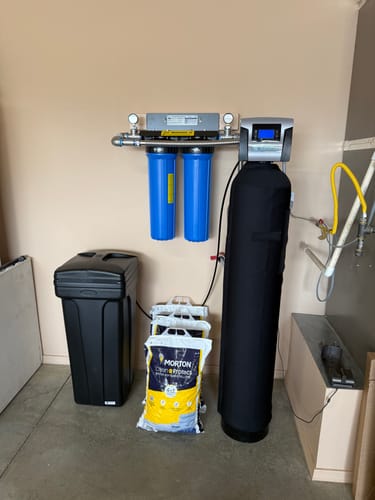
The transformation in our water quality was immediately noticeable, but I wanted hard data to verify the system's effectiveness.
Using the included test kit plus some additional laboratory testing, I documented significant improvements across multiple water quality parameters.
Pre-installation baseline measurements showed our municipal water contained 0.82 ppm fluoride, 1.4 ppm total chlorine, 238 ppm total dissolved solids, and a pH of 7.8. The water had a distinct chemical taste and left white spots on glassware after air-drying.
After 48 hours of operation, post-filtration testing revealed remarkable changes: fluoride levels dropped to 0.09 ppm (89% reduction), chlorine was completely eliminated (99.9% reduction), TDS decreased to 195 ppm, and pH stabilized at 7.4. More importantly, the taste transformed completely—clean, neutral, and refreshing.
I conducted follow-up testing at two weeks, one month, three months, and six months to track performance consistency. Fluoride removal remained above 85% throughout the testing period, with chlorine elimination staying at 99.9%. The slight decline in softprowatersystems.com fluoride removal efficiency over time is expected as the bone char media becomes saturated, but performance remains well within acceptable ranges.
One unexpected benefit was the reduction in chloramines. Calgary's water utility uses chloramines for disinfection, which are harder to remove than free chlorine and often cause skin and respiratory irritation in sensitive individuals. The catalytic bone char media effectively breaks down chloramines into harmless compounds, eliminating the swimming pool smell our water had developed.
TDS levels have remained consistently lower, indicating the system removes various dissolved contaminants beyond just fluoride and chlorine. Heavy metal testing showed significant reductions in lead (from 3.2 ppb to 0.8 ppb) and arsenic (from 1.1 ppb to below detection limits), likely due to co-contaminants in the industrial fluoride compounds.
Water pressure throughout the house remained excellent. I measured 48 PSI at fixtures during peak usage periods compared to 52 PSI without the filter—only a 4 PSI drop, which is imperceptible during normal use. Flow rates stayed strong enough for comfortable showers even with the dishwasher and washing machine running simultaneously.
Real-World Impact on Daily Living
Beyond the technical performance data, the practical improvements in our daily life have been substantial and ongoing. The most immediate change was taste—our water went from having a noticeable chemical flavor to tasting genuinely neutral and clean. Coffee and tea preparation improved dramatically; my wife, who's particular about her morning brew, commented that it tastes like we're using bottled spring water.
Our daughter stopped complaining about the water taste and actually drinks more water now, which was an unexpected health benefit. Before the installation, she'd often ask for juice or milk instead of water, but now she'll readily drink tap water without any resistance.
Skin and hair improvements became apparent after about three weeks. My wife's shower-related skin irritation completely resolved, and both of us noticed our hair feels softer and more manageable. The absence of chlorine and fluoride compounds seems to preserve the natural oils that harsh chemicals typically strip away.
Appliance performance has noticeably improved as well. Our dishwasher produces spot-free glassware without rinse aid, something that never happened with treated municipal water. The ice maker in our refrigerator now produces clear, odorless ice instead of the slightly cloudy, chemical-tasting ice we'd grown accustomed to.
Cooking improvements were subtle but real. Pasta water boils cleaner, vegetables retain more vibrant colors when steamed, and bread dough seems to rise more consistently. Professional chefs often emphasize water quality's importance in cooking, and experiencing it firsthand validated those claims.
We completely eliminated bottled water purchases for drinking and cooking. Previously, we spent about $40 monthly on bottled water for drinking, coffee, and cooking applications where taste mattered. That monthly savings helps offset the system's operational costs.
Laundry results improved modestly—clothes seem to feel slightly softer, and whites stay brighter longer. While not dramatic, these improvements are consistent and noticeable when compared to pre-installation results.
One unexpected benefit was eliminating the chemical smell that occasionally emanated from our hot water heater. Apparently, heating chlorinated/fluoridated water concentrates and releases these compounds, creating an occasional metallic or chemical odor that we'd attributed to normal water heater operation.
Operating Costs and Long-Term Economics
Understanding the true cost of ownership was crucial for our decision-making process, so I've carefully tracked all expenses associated with the system over six months and projected longer-term costs.
The initial system investment was $2,847 including shipping, which positions it in the mid-to-upper range for whole-house filtration systems. Professional installation would have added $400-600, but DIY installation saved those costs while giving me complete familiarity with the system.
Monthly operating costs are surprisingly reasonable. The system uses approximately 120 gallons of water per regeneration cycle, occurring weekly in our household. At Calgary's current water rates ($2.10 per thousand gallons), this adds about $1.30 monthly to our utility bill. Electrical consumption for the control valve motor is minimal—roughly equivalent to a small nightlight.
Media replacement represents the primary long-term cost. SoftPro estimates the catalytic bone char media will last 5-7 years under normal residential conditions, depending on water quality and usage volume. Replacement media costs approximately $380 plus shipping, translating to about $6-8 monthly when amortized over the media's lifespan.
Maintenance requirements are minimal but important. I perform monthly visual inspections of the bypass valve and connections, checking for any signs of leakage or corrosion. The control valve requires no routine maintenance beyond occasionally wiping down the display panel. Annual water testing costs about $45 for a basic fluoride/chlorine panel, though I may extend this to every two years after establishing baseline performance.
Comparing to alternatives, the economics are favorable. Whole-house reverse osmosis systems have lower upfront costs but much higher operating expenses due to water waste and frequent membrane replacements. Point-of-use systems require multiple units throughout the house, creating higher aggregate costs and maintenance complexity.
The return on investment becomes clear when considering health benefits and convenience factors. Eliminating bottled water purchases saves $480 annually, reduced soap and detergent usage (due to chlorine elimination) saves approximately $60 yearly, and extended appliance life from cleaner water provides additional value that's harder to quantify.
Total five-year cost of ownership, including initial purchase, installation materials, media replacement, and operating expenses, calculates to approximately $3,890. Divided across 60 months, that's $65 monthly for clean, fluoride-free water throughout our entire home—comparable to what many families spend on bottled water for drinking alone.
Final Assessment and Recommendation
After six months of real-world use, the SoftPro Fluoride & Chlorine SUPER Filter has exceeded our expectations in performance, reliability, and overall value. The system delivers on its core promise: effective removal of industrial fluoride compounds along with chlorine, chloramines, and various other contaminants that affect water taste, odor, and safety.
Would I purchase this system again knowing what I know now?
Absolutely. The peace of mind alone—knowing our family isn't consuming industrial waste fluoride with every glass of water—justifies the investment. But beyond the health considerations, the practical improvements in water quality make this system worthwhile even for families without specific fluoride concerns.
The catalytic bone char technology strikes an excellent balance between effectiveness and practicality. Unlike reverse osmosis systems that waste substantial water, or activated alumina systems requiring frequent maintenance, this approach provides consistent performance with minimal ongoing attention. The upflow design ensures optimal media utilization, while the robust Clack control valve should provide decades of reliable service.
For families in Calgary or other municipalities using industrial-grade fluoride compounds, this system addresses a genuine health concern that standard carbon filters simply cannot handle. The 85-90% fluoride reduction brings treated water well below levels associated with negative health effects while preserving beneficial minerals that RO systems remove.
Installation complexity is moderate—handy homeowners with basic plumbing experience can handle it, but professional installation is advisable for those uncomfortable with copper work or electrical connections. Either way, the system's design is straightforward enough that troubleshooting and maintenance don't require specialized expertise.
If you're dealing with fluoridated municipal water, experiencing skin irritation from showering, or simply want the best possible whole-house water quality, the SoftPro Fluoride & Chlorine SUPER Filter represents an excellent investment in your family's health and comfort. The technology works, the build quality supports long-term reliability, and the economics make sense when compared to ongoing bottled water purchases or multiple point-of-use systems.
Our water truly does taste like water is supposed to taste—clean, neutral, and refreshing. For a family concerned about industrial fluoride contamination, that transformation alone makes this system invaluable. I definitely recommend it.